Get Full Government Meeting Transcripts, Videos, & Alerts Forever!
Get email alerts on the Washington Measures topic
No spam. Unsubscribe anytime.
Visit Tracker’s Washington measures page summarizes screenings, referrals and reminders; users raise questions about status wording
Summary
David Tindell demonstrated how the Washington measures tab shows upcoming screenings and well‑child visit windows, how PHQ‑9 screening referrals are recorded, and how referral follow‑up must be logged on resource connections; participants said the new status text is confusing and asked for clarification.
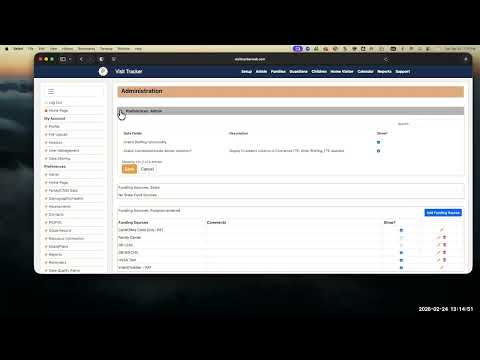
David Tindell demonstrated the Visit Tracker Washington measures page, which summarizes per‑family and per‑child required screenings, developmental checks and due dates for the state reporting period. The tab must be enabled in account setup; once enabled it shows a family overview (enrollment date, MCV start date, DOB) and per‑construct items such as guardian depression screening (PHQ‑9), IPV screening, child well‑child visit ranges and developmental screening windows.
Tindell showed a PHQ‑9 assessment being added and how positive scores can generate a referral. He emphasized that the Washington measures page is a summary across records and that detailed follow‑up must be recorded on the referral or resource connection itself so the measure counts. "This page is just summarizing data across records," he said, "you need to go back to the referral itself." During the demo he created a mental‑health resource connection and confirmed the measures page picked it up.
Participants raised usability concerns about the text used for service status. Several attendees said the new option list ("services initiated", "services continued", "services discontinued", "services completed") was harder to align to practice than the prior simple "received services" flag. Tindell acknowledged an unintended impact from a text change and invited DO/partners to discuss clearer wording.
Attendees also asked whether referrals entered outside the assessment workflow (for example, created later by a mental‑health consultant) are captured in the measures summary; Tindell demonstrated a referral created without linking to an assessment and showed it is picked up by the Washington measures view.
On counting a referral as completed, Tindell said the referral record must be marked so the measures numerator reflects completed services. Programs should record follow‑up steps (for example, "first discussed" or "service completed") in the referral record to ensure it is counted consistently.
The walkthrough closed with guidance to use reminders and the resource connection edit flow to document follow‑up; attendees were encouraged to send feedback and support tickets for ambiguous cases.