Get Full Government Meeting Transcripts, Videos, & Alerts Forever!
Get email alerts on the Public Art Allocation topic
No spam. Unsubscribe anytime.
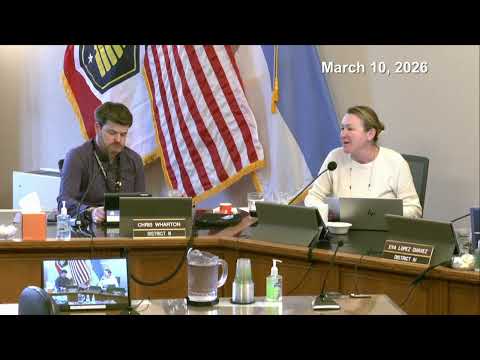
Council’s work session leans toward community-run ‘SLC Stories’ banners and panels for district art funding
Summary
At a March 10 work session, Salt Lake City Council members signaled unanimous support in a straw poll for a regranting model—“SLC Stories”—that would distribute $2,000 per council district for community-driven temporary panels and banners, prioritizing local partners and speed of implementation.
Salt Lake City Council members indicated unanimous support in a straw poll during their March 10, 2026 work session for a community-driven public-art model that would use $2,000 allocated to each council district.
Council policy analyst Sylvia Richards and arts staff presented three high-level frameworks for the small-district art program: (1) temporary artist residencies hosted by Salt Lake City Public Library branches, (2) temporary painted intersections/sidewalk placemaking, and (3) a small regranting program to support community panels, banners and local partner-led installations. Renato Medo Gonzalez, the city’s public-art program manager, said the options were developed to emphasize community participation, public–private partnerships and flexible implementation while acknowledging the modest budget per district.
Council members praised the concept of district-based art and repeatedly underscored the importance of public–private partnerships and community ownership. Council Member Love Chavez and others said they favored options that would leverage external funding or local businesses to supplement the small city allocation. After staff summarized the three options, the Chair moved a straw poll to support option three, the SLC Stories panels and banners model; the council responded unanimously in favor.
Staff told members the regranting approach is likely the fastest to implement and could enable authentic neighborhood-driven projects by directing funds to recognized community organizations, small businesses or other local partners. The arts program will now develop a more detailed implementation plan, including how council members can provide district input and how private supplemental funding might be incorporated.
The work session also noted an upcoming citywide temporary-art event, 'Wake the Great Salt Lake,' scheduled March 25–26, implemented with Bloomberg Philanthropies support and covering all seven council districts.
What’s next: staff will return with a refined program structure and implementation timeline for the council to consider, including specifics on eligibility for regrant applicants and how districts can offer guidance. The item was advanced by a nonbinding straw poll; a formal ordinance or funding commitment would require follow-up action by the council.