Get Full Government Meeting Transcripts, Videos, & Alerts Forever!
Get email alerts on the State Land Lease Sierra Vista topic
No spam. Unsubscribe anytime.
Cochise County supervisors ask state to reconsider 30-year lease of ~160 acres near Sierra Vista and urge sale instead
Summary
At a March 24 work session, Supervisor Melody Laneisby urged the governor and the Arizona State Land Department to offer roughly 160 acres east of Sierra Vista for sale rather than a 30-year lease for a solar project, citing potential long-term tax revenue losses and neighborhood impacts; the board asked staff to draft a letter and place it on the April 7 agenda for review.
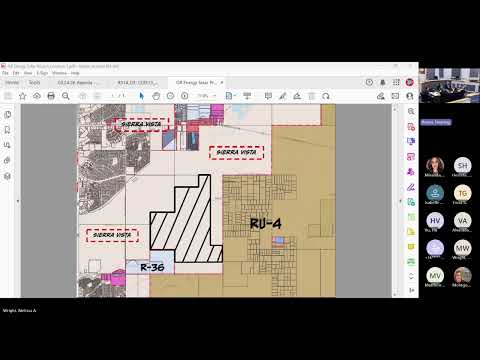
Supervisor Melody Laneisby told the Cochise County Board of Supervisors at a March 24 work session that the Arizona State Land Department has posted notice for a commercial lease of roughly 160 acres east of Sierra Vista for a solar generating facility and urged county leaders to ask the governor and the land department to offer the parcel for sale instead of a 30-year lease.
The supervisors discussed why the state may be pursuing a 30-year lease — speakers said the timetable appears driven by an effort to secure federal solar subsidies — and raised financial and community concerns. Laneisby and other participants said a 30-year fixed annual payment would lock in a relatively small, inflation-eroding stream of revenue to the state trust and deprive local taxing jurisdictions of the larger, long-term benefits that would come if the land were sold and placed on the property tax rolls.
Under discussion was an estimated lease valuation of about $6.8 million over 30 years; an initial calculation presented by a supervisor put the annual payment at about $270,000 per year, and a later reference in the meeting corrected the figure to approximately $226,000 per year. Speakers noted that state trust land itself is generally tax-exempt, while structures on leased trust land may produce personal/business property or structural tax, and that solar installations tend to depreciate quickly for tax purposes — factors that could reduce local tax revenue shortly after construction.
Laneisby characterized the arrangement as creating the "perception" of a "sweetheart deal" for a lessee and said the county should press for a sale to maximize proceeds for beneficiaries of the state trust (including public education) and to protect the county and city tax base. "At a minimum, I would like to send a letter to the governor and the land department saying that this should be sold, that this should not be a long-term lease," she said during the session.
Board members also flagged nonfiscal concerns. They identified nearby subdivisions, a country club and a school close to the proposed parcel and raised safety questions about battery energy storage and visual and property-value impacts for adjacent neighborhoods. A participant identified in discussion as Mr. Pew noted a G&T substation and major transmission lines are nearby, which developers likely consider an advantage for grid interconnection.
Legal staff and supervisors noted limits on the county's authority: the parcel is state trust land governed by Title 37, and the county cannot require the state to follow local planning and zoning processes. The board discussed that the state may notify local jurisdictions and the nearby military installation about potential mission impacts, but that Title 37 gives the state broad discretion over leasing decisions.
As a next step, supervisors directed staff to draft a "polite but firm" letter to the governor and the Arizona State Land Department asking them to reconsider leasing the parcel and instead offer it for sale (or, if sale cannot be expedited, to consider a shorter-term lease with an option to buy). The board asked staff to coordinate with the City of Sierra Vista, request a tax-differential analysis from county staff (identified in discussion as Phil or the assessor's office) to show the projected loss to local tax revenues, and to place the draft letter on the April 7 agenda so supervisors can review and sign it. No formal board vote on the letter was recorded during the work session.
The board closed the discussion and moved to other scheduled work-session items; the public-records process and an inspector-general item were set for subsequent meetings.
Ending: The board directed staff to prepare the letter and supporting financial analysis, coordinate with city officials, and return the item for consideration on the April 7 agenda; no formal action to file litigation or to veto the state's notice was taken at the March 24 session.