Get Full Government Meeting Transcripts, Videos, & Alerts Forever!
Get email alerts on the Special Education topic
No spam. Unsubscribe anytime.
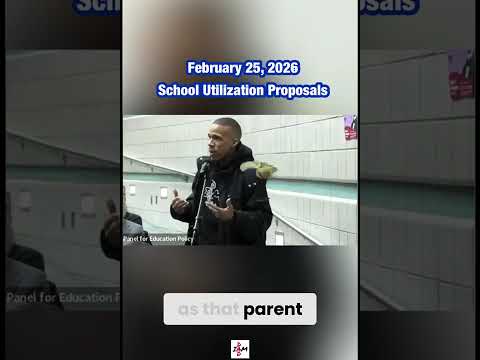
Quentyn Mesatin, District 28 parent leader, urges that D75 be a stepping stone to mainstream schools
Summary
A parent and parent-council leader in District 28 told a public comment session that D75 special-education programs should prepare students for independence and neighborhood inclusion rather than act as a permanent placement, citing his own children27s progress and concerns about long bus rides to distant schools.
Quentyn Mesatin, who identified himself as president of district 28 CC, president of the Queens High School President's Council and vice president of the D75 President's Council, told a public comment session that D75 placements should not be treated as a "last stop" for students with disabilities but as a step toward independence.
"D75 isn't a place to get stuck. It's a place to be seen and heard and give you the tools you need to build a foundation to grow," Mesatin said, summarizing why he supports keeping strong transition pathways in the special-education system.
Mesatin described his personal experience as the father of six children, including two he said are on the autism spectrum — a fourth grader and a fifth grader. He said the prospect that the school system and other adults will not "advocate for our children" creates stress and fear for families.
He raised a specific operational concern about assignment and transportation, saying some students are pushed to attend schools "45 minutes away, an hour away" rather than the neighborhood school their siblings and neighbors attend. "These are children in the same neighborhood. They go to the same park. They go to the same grocery store and the same church," he said, arguing that such placements separate students from community supports.
Mesatin said his son, who he described as being in a P4 class, is due to graduate fifth grade in D75 and that school staff have told him the student has progressed academically and vocationally to the point where they are recommending a return to special-education services aligned with a diploma track. "They've been pushing me to tell me that he is doing so well academically and vocationally that he does not need to stay in D75. He needs to go back into special education in line to get a diploma," he said.
He framed advocacy as a learning process: he said he did not fully understand these issues until becoming the parent of children with special needs and that his lived experience drives his advocacy for families navigating D75 and related services.
Mesatin closed by thanking the meeting and acknowledging audience applause. The public comment made no formal request for board action in the transcript and no vote or official motion was recorded during his remarks.