Get Full Government Meeting Transcripts, Videos, & Alerts Forever!
Get email alerts on the Unsafe Building Rehabilitation topic
No spam. Unsubscribe anytime.
Goshen board affirms unsafe-unit orders at 1705 West Plains Drive, approves rehab plan and levies per-unit fines
Summary
After hearing that 16 of 17 units at 1705 West Plains Drive are vacant and lack utilities, the Goshen City Board of Public Works and Safety affirmed seven unsafe-unit orders, approved a phased rehabilitation agreement to begin March 27, 2026, and voted to assess $2,500 in civil penalties per affected unit.
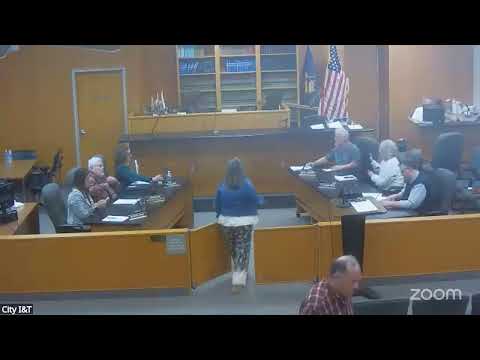
The Goshen City Board of Public Works and Safety on March 26 affirmed multiple unsafe-building orders for 1705 West Plains Drive and approved a phased rehabilitation agreement intended to restore the property’s 16 vacant units to habitable condition.
Grace, the city’s building commissioner, told the board the seven orders under review apply to units that ‘‘have no working electrical, no gas, no plumbing or water’’ and that meters had been pulled; she said many units also show moisture damage, failed flooring and other deficiencies and that the building’s condition has generated repeated police calls. ‘‘Every one of the seven units subject to tonight’s hearing has no working electrical, no gas, no plumbing or water,’’ she said.
The building commissioner said staff offered the owner a rehabilitation agreement in February that laid out a phased schedule for restoring utilities and bringing units up to code. Grace described options for the board including affirming, modifying or rescinding the orders; seeking receiverhip for the property; or entering a rehabilitation agreement to allow the owner to complete work under a court-enforceable schedule.
Owner Cecil Bond Trigger spoke to the board and acknowledged long-standing problems while saying much interior work had been done and the principal remaining hurdle was restoring utilities. ‘‘The biggest issue we have out there is utilities…they retired the service,’’ Bond Trigger said, adding he had prepared a spreadsheet committing dates for repairs and that he ‘‘will get this done.’’ He also said he was willing to sign the written agreement the building department produced.
Board members pressed Bond Trigger on why repairs and communications with the city had lagged; one member questioned why the owner paid prior fines instead of completing repairs. Mr. Fernandez asked how the board could be confident the owner would follow through. Staff told the board that for several units civil penalties of $2,500 had already been assessed and collected in 2025 and that the board could impose additional penalties of up to $5,000 per order under state law.
The board took three linked actions. First, members unanimously found the evidence supports the building commissioner’s finding that the identified units are unsafe and affirmed the seven repair orders. Second, the board voted to move forward with a rehabilitation agreement negotiated by city staff that will start March 27, 2026, and use a phased schedule: groups of units are to be addressed in succession with a 90-day window applied to each phase so utilities restoration and code compliance can proceed in stages; the agreement includes default language that allows the city to seek receiverhip if the owner fails to meet deadlines. Third, the board voted to assess civil penalties of $2,500 per unit for willful failure to comply with the building inspector’s orders on the units under review; that motion also passed by unanimous voice vote.
City staff repeatedly noted the option to seek receiverhip — a court process that would place the property under control of a court-appointed receiver to complete repairs — remains available if the owner defaults. Staff also said several contractors have expressed interest in performing receiverhip-style rehabs if the city pursues that route.
What happens next
Under the board’s motion the rehabilitation schedule takes effect March 27, 2026. The city will bring a finalized agreement back to the Board of Works for signature and begin the phased work plan; if Bond Trigger does not meet the deadlines, the agreement’s default provisions allow the city to move toward receiverhip and the civil-penalty structure will remain available. The board’s actions cover the seven units specifically identified in the orders; staff said receiverhip could potentially address the whole building if needed.
Key facts from the hearing
- Property: 1705 West Plains Drive; owner identified in the record as Cecil Bond Trigger. - Units: 17 residential units in the building, of which the building commissioner reported 16 vacant and one occupied. - Orders: seven repair orders were before the board (four issued May 2, 2025; three issued Sept. 26, 2025). - Existing penalties: $2,500 per unit previously assessed and collected for the four May 2025 orders (total $10,000); the board imposed an additional civil penalty of $2,500 per unit on the units under the current hearing. - Timeline: rehabilitation agreement phased with 90-day windows per group of units; first 90-day phase to begin March 27, 2026.
The Board of Works concluded the hearing after passing the rehabilitation motion and the civil-penalty motion. The city will return a finalized agreement to the board for authorizing signatures and staff will continue enforcement if deadlines are missed.