Get Full Government Meeting Transcripts, Videos, & Alerts Forever!
Get email alerts on the Smoke Shops Illicit Sales topic
No spam. Unsubscribe anytime.
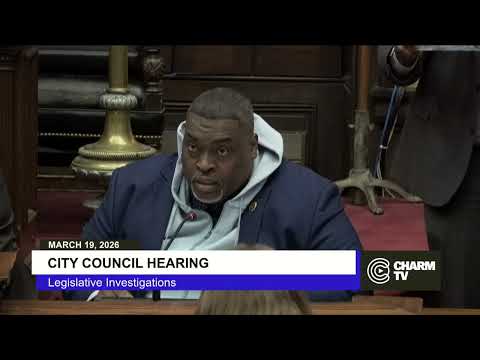
Baltimore council hearing spotlights spread of smoke shops, proposed measure to close illegal sellers
Summary
City officials, public‑health experts and residents told a City Council committee that dense clusters of smoke shops are selling unregulated vape and cannabis products to youth and undermining neighborhoods; the sponsor proposed legislation to give local authorities new closure powers while agencies said enforcement and staffing are limited.
Baltimore City Council members, public‑health officials and community residents pressed city and law‑enforcement agencies on Tuesday about a rapid growth in smoke shops and the sale of unregulated vape and cannabis products that officials said are disproportionately concentrated in lower‑income neighborhoods and accessible to young people.
Council President Cohen and bill sponsor Councilman John Glover framed the hearing around data and neighborhood testimony, saying Baltimore has roughly 1,200 licensed tobacco retailers and that a 2020 study showed tobacco retailers are concentrated at far higher rates in the city’s lowest‑income neighborhoods. “Smoke shops are crowding out other businesses and they are frequently preying on our kids,” Cohen said, listing cases in which city staff reported finding unauthorized products for sale and announcing legislation to allow the city to shut businesses that sell cannabis illegally.
Why it matters: witnesses from public‑health groups, schools and research centers described how retail marketing, product design and high vendor density make initiation easier for adolescents. Laura Hail of the American Heart Association said youth vape use in Maryland has surpassed adult tobacco use and called retail density a major driver. Johns Hopkins public‑health researcher Ryan Kennedy cited studies linking point‑of‑sale marketing and vendor density to higher youth odds of trying tobacco products.
What agencies said: Baltimore’s Health Department described prevention and retailer‑education efforts and said its enforcement work is narrowly funded to check under‑21 sales; the department reported roughly 149 compliance visits in fiscal 2024 and said it has issued under 200 citations in the most recent year but currently relies on one part‑time enforcement officer, with plans to reclassify an existing position and add another funded position in the FY27 budget. The Baltimore Police Department and the sheriff’s office described coordinated enforcement with the state Alcohol, Tobacco and Cannabis Commission (ATCC) and highlighted seizures: the sheriff reported a recent raid that recovered 56 pounds of marijuana and BPD cited an instance where 65 pounds and over $60,000 in cash were recovered in a search and seizure incident.
Enforcement gaps and legal limits: law‑enforcement witnesses and council members repeatedly pointed to legal and resource limits. BPD officials said a lack of a clear, enforceable local definition of “smoke shop,” state preemption issues (the “Altatus” decision was cited during testimony) and the ATCC’s current authorities constrain local closure powers; several council members urged exploration of padlock/closure authority or other local licensing and zoning tools. Health staff said their current grant funding prioritizes preventing youth sales and that broader product enforcement (for non‑tobacco products) falls largely to state regulators.
Community voices: residents, school staff and young people gave emotional testimony about easy access and addiction. A youth witness said vaping began as a social and discreet behavior in high school and described daily cravings; a school assistant principal described students arriving on campus under the influence and said existing school responses and family supports are insufficient. Neighborhood leaders said storefront smoke shops replace grocery stores and contribute to a sense of disorder and insecurity.
Next steps: Councilman Glover said legislation filed in October (identifying the file as 20‑0037R at the hearing) would enable the city to act against illegal sales and that the council will pursue data improvements, interagency coordination, and possible legislative tools including pause on new licenses, tighter licensing/zoning or padlock authority. Agencies indicated willingness to coordinate but emphasized resource and statutory constraints.
The committee did not take a vote; the hearing closed with a pledge to follow up with the health department, police, the sheriff’s office and the law department about legal options and data sharing.