Get Full Government Meeting Transcripts, Videos, & Alerts Forever!
Get email alerts on the Solar Project topic
No spam. Unsubscribe anytime.
Delegation split 8–6 on recommendation for 100 kW jail solar project; committee cites 30% federal tax credit window
Summary
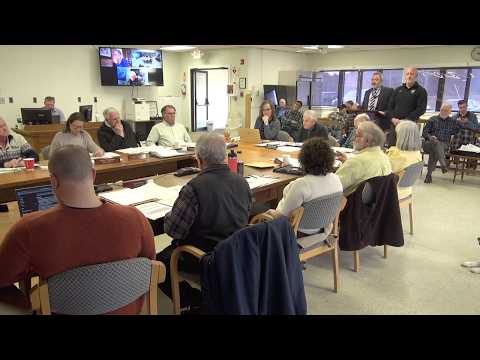
An exploratory committee proposed a 100 kW solar array on the county jail that it said would generate roughly $30,000 a year and about $1 million over 40 years; the delegation voted 8–6 against recommending moving forward now, largely because of timing, grant pursuit and payback horizon.
A solar exploratory committee presented a financial analysis for installing a 100 kW solar array at the county jail. The committee said the system would generate roughly 180,000 kWh in year one (about $30,000 in avoided electricity purchases at present contracted rates) and — with an 80% loan and a federal 30% investment tax credit — would show positive cashflow after an initial two‑year support period and a longer lifetime benefit.
Committee members urged the delegation to act promptly because an investment tax credit tied to the Inflation Reduction Act requires a qualifying outlay (5% of project cost) by July 4, 2026. The exploratory report included modelled cashflow lines showing an early deficit that reverses after the investment tax credit and loan payoff and estimated lifecycle value around $1 million over 40 years.
Delegates raised practical concerns: warranty longevity for panels and inverters, the reliability of small vendors over multi‑decade warranties, environmental disposal and recycling of panels, and the viability of alternative technologies (optimizers vs. string inverters). After discussion, the delegation voted 8 against, 6 in favor on a motion to recommend proceeding with the jail solar project; commissioners were encouraged to pursue additional grant options and provide further paperwork to delegates for reconsideration.
What happens next: the exploratory materials will be distributed to commissioners and delegates for additional review; the committee was asked to return with grant and procurement paths and a reduced risk scenario if the delegation wants to revisit the recommendation before the investment‑tax‑credit eligibility window closes.