Get Full Government Meeting Transcripts, Videos, & Alerts Forever!
Get email alerts on the Vending Ordinance topic
No spam. Unsubscribe anytime.
Planning commission recommends Yuba City Council consider tighter rules for food trucks, pop‑ups and sidewalk vending
Summary
The Yuba City Planning Commission voted to forward a draft update to municipal code 26‑01 that tightens permits and enforcement for mobile and open‑air vendors, formalizes youth‑entrepreneur exceptions and limits local controls over sidewalk vendors per state law.
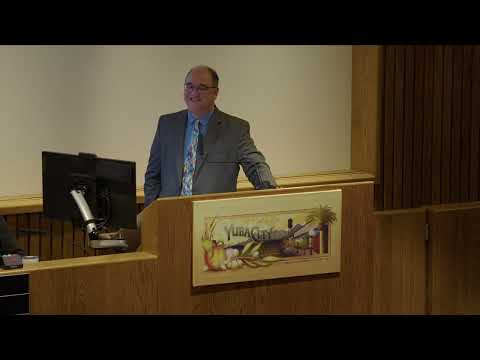
The Yuba City Planning Commission voted to recommend that the City Council consider a zoning code amendment to regulate mobile, open‑air and sidewalk vending, following a staff presentation by Development Services Director Doug Libby.
Libby told commissioners they were not making a final decision but were being asked to send a recommendation to the council. "For tonight, you're not making a decision. You're looking to make a recommendation to the city council," he said. Staff said the draft modernizes rules that date to 2010 and responds to a rise in unpermitted "pop‑up" food operations that, staff argued, can present food‑safety and accessibility concerns while undercutting permitted brick‑and‑mortar businesses and food trucks.
The draft would: require permits to be displayed at the point of sale; update vendor definitions; extend allowable vending hours to 9 p.m.; allow food trucks to serve for up to 2.5 hours daily in school loading/unloading zones with school approval; limit private‑property food‑truck stays to two hours unless a temporary use permit is issued; create a temporary use permit process for short open‑air events (three or fewer consecutive days in a 90‑day period); and formalize exemptions that let minors (under 18) operate low‑impact sales such as lemonade stands or scout cookie booths without a business license.
Libby emphasized public‑health concerns illustrated in enforcement photos and site visits, including makeshift generators and poor temperature control. "There isn't a food a handwashing station there," he said, noting the lack of handwashing as a specific safety shortcoming staff wants the ordinance to address.
The draft also increases enforcement options for non‑sidewalk vendors: it would allow the city to seize and store perishable food and equipment (stored up to 30 days, then disposed of if unclaimed), require owners to pay salvage, storage or disposal costs, and establish an appeal process. Libby said the city has relied on a partnership with Sutter County Environmental Health for at least one recent seizure because the city’s municipal code does not itself provide seizure authority for those actions.
State law limits local authority over sidewalk vending, Libby said, citing Senate Bill 946 and subsequent legislation that restricts what local governments can require. "Under state law, violations are basically ... limited to administrative fine," he said, and noted that misdemeanor penalties proposed elsewhere in the draft would not apply to sidewalk vending because of that restriction.
Commissioners pressed staff on enforcement practice and logistics. When a commissioner asked whether owners receive an itemized receipt and photographs after seizures, Libby said yes: "When we did the enforcement action recently, the equipment ... was put on a form, they were given a copy. We have a copy. It was photographed." Commissioners also discussed the possibility of creating off‑street vendor locations (for example, a former Kmart lot or other county‑owned sites) and whether the city could partner with the county or fairgrounds to provide a regular, permitted location for vendors; Libby said such arrangements would require county or fairgrounds authorization and appropriate permits or insurance.
A commissioner asked how a sidewalk vendor differs from a push cart; Libby replied they can be the same in some circumstances and cautioned that the ordinance must be careful in its application to avoid overreach. Several commissioners said having police accompany code enforcement during seizures is prudent to avoid escalation; Libby said PD has partnered on past actions and that law enforcement presence is often advisable.
The public hearing on the ordinance produced no public comment. A commissioner moved to forward the item to the City Council as presented by staff; the motion was seconded and the commission approved the recommendation (the transcript does not include a roll‑call tally). The draft will proceed to the City Council, which will schedule a public hearing of its own.
Next steps: the Planning Commission’s recommendation will be transmitted to the City Council for consideration and a future public hearing; staff also signaled follow‑up work on temporary use permits and enforcement procedures.