Get Full Government Meeting Transcripts, Videos, & Alerts Forever!
Get email alerts on the Ethics And Oversight topic
No spam. Unsubscribe anytime.
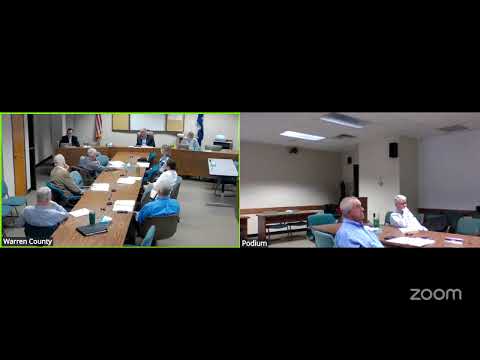
Warren County ethics board elects Harold Worths chair, reviews standing rules and new disclosure form
Summary
At its March 31 orientation, the newly sworn Warren County Board of Ethics elected Harold Worths chair and Monnique Boule vice chair, reviewed proposed standing rules and a more detailed financial disclosure form, and discussed complaint, advisory-opinion and investigation procedures.
The newly formed Warren County Board of Ethics elected Harold Worths as chair and Monnique Boule as vice chair at an orientation meeting held March 31, where members reviewed draft standing rules, a revamped financial disclosure form and the board's complaint-and-investigation procedures.
The vote to approve the leadership nominations was moved by Pat D. and seconded by Scott Vanderhoff; members present carried the motion unanimously. After the vote, Worths thanked colleagues for their confidence and asked members to introduce themselves so the board could draw on its mix of legal, financial and public‑health expertise.
County Attorney Larry Elman, who will advise the board, walked members through the proposed standing rules and the statutory framework that governs the body. He emphasized that the board’s role is advisory — it may investigate complaints and issue findings and recommendations, but it cannot impose discipline. "This board is appointed for one year," Elman said, explaining recent changes in election timing and the effect on appointment terms. He told members the draft rules set a quorum requirement (to be changed in the draft from three to four members) and outline when meetings would be public or held in executive session.
Elman also reviewed the complaint process the draft rules establish: complaints must meet minimum preconditions (a signed affidavit with date, time, location and detailed facts identifying an alleged respondent) before the chair forwards them to the board for an initial determination of whether reasonable cause exists to investigate. He described how the attorney’s office will assemble evidence (including archived emails and documents), provide secure, Bates‑stamped copies to board members, and help schedule investigatory interviews. He said respondents have 21 days to file a sworn answer once a complaint proceeds.
The board discussed advisory opinions, which an employee or officer may request in writing. Elman described advisory opinions as confidential during preparation and, when issued, a potential "safe harbor" for an employee who follows the board’s guidance; he said approved opinions are typically posted on the county website to aid future employees. Members debated whether unfavorable advisory opinions should be posted and were told that publication would be decided on a case‑by‑case basis.
A major focus was a revised financial disclosure form the county developed to expand what must be reported compared with the previous version. Members raised practical questions about large volumes of filings, how the board should review confidential disclosures without creating quorum issues, and how to treat complex matters such as property held in trusts or household definitions. Elman said the attorney’s office will keep the forms in secure custody and make them available for members to review in a controlled fashion; he recommended members file their disclosures within 30 days and proposed the board try to meet within the next two weeks to begin reviews, while acknowledging flexibility given members’ schedules.
Board members asked for access to prior years’ filings to compare the new form with past disclosures; staff said previous years are retained and can be made available. The board and staff agreed to coordinate appointments for individual or paired in‑office reviews, and to address confidential items in executive session when required.
Members closed the meeting by agreeing to return with notes or proposed edits to the standing rules and disclosure form; staff will circulate available dates and coordinate next steps. The chair moved to adjourn and the meeting concluded.
What’s next: members were asked to file financial disclosures within 30 days and await staff emails to schedule review sessions; staff indicated a follow‑up board meeting would be scheduled within weeks to start the formal review process and to consider any suggested changes to the standing rules or the disclosure form.