Get Full Government Meeting Transcripts, Videos, & Alerts Forever!
Get email alerts on the Budget Redistricting topic
No spam. Unsubscribe anytime.
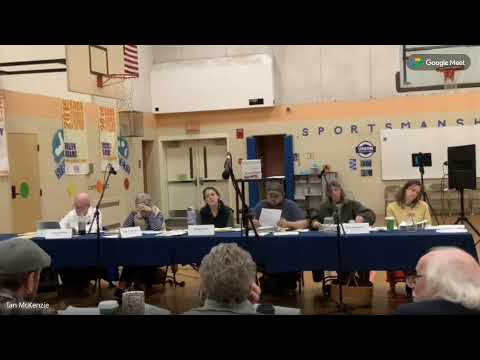
RSU 40 budget workshop spotlights Friendship school risk and program cuts; board moves to review budget line by line
Summary
At an RSU 40/MSAD 40 budget workshop, public commenters warned that moving sixth graders and staff cuts could force Friendship Village School to close, urged preserving world language and small‑school programming, and board members moved to review budget summaries line‑by‑line, to study adding two language teachers, and to commission a facilities/redistricting review.
At a public budget workshop, the RSU 40/MSAD 40 School Board heard more than an hour of public comment about possible school consolidation, program cuts and staffing changes, including repeated warnings that Friendship Village School could effectively be closed by enrollment shifts rather than by a single vote.
Speakers representing parents, teachers and special‑education staff told the board that cuts to specialists and combining grade levels would reduce instructional quality and harm community cohesion. One commenter said the value of special classes “is not just 45 minutes of PD” and argued those programs produce lasting inclusion and cultural awareness. Another parent and teacher, Ima Bender, said combining grade levels would be “a disservice to our children” and urged preservation of class sizes and supports.
Why it matters: RSU 40 is weighing budget reductions against declining and shifting enrollment, and decisions about redistricting, staffing and facilities will affect programs across five elementary schools and the sustainability of small community schools such as Friendship. Several commenters offered concrete proposals — temporary independence for Friendship, phased transfers, fundraising for a teacher position, and a districtwide facilities review — to avoid abrupt closures.
Public comments and evidence: Commenters cited enrollment figures and budget pressure repeatedly. One speaker said district data indicate roughly 2,700 residents under age 18, with several hundred not currently enrolled in district schools and about 200 students who might be persuaded to return. Special education needs and caseloads were raised as immediate cost and service pressures: speakers described inherited deficits in special education and urged caution before adding new positions without a sustained turnaround plan. Katie O., who identified herself as an IEP coordinator, warned of high resource‑teacher caseloads and recommended three high‑school resource teachers based on current needs.
Board motions and next steps: During the meeting board members introduced several procedural motions but did not record final votes in the transcript. One board member moved that the board go through the superintendent’s budget summaries line by line with administrators providing detailed feedback and explanations; proponents said an organized, itemized review would allow more transparent decisions. A separate motion asked administration to assess the viability of adding two districtwide world‑language teaching positions to preserve equitable access across all elementary schools. Later in the meeting a member moved that the board advise the full board to commission a district‑wide facilities and redistricting review to inform potential consolidation, student‑distribution changes and long‑range planning. None of the motions show a recorded outcome in the transcript.
Positions voiced in the meeting include a mix of caution and pragmatism: some residents argued the district should prioritize maintaining five small neighborhood elementary schools, while others said facilities and transportation costs may require consolidation. Administrators explained limits on transportation capacity and noted current vans are stretched transporting roughly 100–120 preschool and 4‑year‑old children each day, with additional vehicles likely needed next year if enrollment of younger students increases.
Claims and responses: Commenters repeatedly asserted that Friendship is being “forced to close” through enrollment shifts and program changes rather than by direct board action; the administration had previously provided extensive written responses on the issue, but the meeting transcript shows no formal decision to close Friendship. Assertions about program reductions (for example, proposed cuts to world‑language positions) prompted motions to study alternatives rather than an immediate elimination.
What’s next: The motions recorded in the public workshop call for more detailed, line‑by‑line budget work by administrators and for district studies (language staffing viability and a facilities/redistricting review). The transcript does not show final votes or formal adoption of any of the motions; the board appeared to direct staff to return with more information to inform future decisions.
Reporting note: Quotes and attributions in this article are taken directly from the meeting transcript and are attributed to the speakers who identified themselves or whose functional role is clear in the record. Where comments were part of an extended public‑comment sequence and no speaker name was given, the article uses the functional label “Public commenter.”
Ending: The board left several substantive decisions for future meetings; administrators were asked to provide detailed budget line‑item information, to assess options for retaining world language instruction and to participate in a district facilities/redistricting review requested by board members. The board did not record any final votes on school closures or staffing changes during the session.