Get Full Government Meeting Transcripts, Videos, & Alerts Forever!
Get email alerts on the School Facilities topic
No spam. Unsubscribe anytime.
Boonton board reviews two referendum concepts for Rockaway Valley School and signals preference for larger plan
Summary
Architects presented two referendum options to address educational shortcomings and infrastructure needs at Rockaway Valley School: B1 (smaller addition, one music room) and B2 (larger addition with separate band and choral rooms). Board members signaled support for B2; the district will submit applications to the state and await preliminary subsidy letters before finalizing ballot questions.
Boonton Township's Board of Education heard architects' presentation of two referendum concepts for Rockaway Valley School and moved the next steps in the state application process after a lengthy public Q&A.
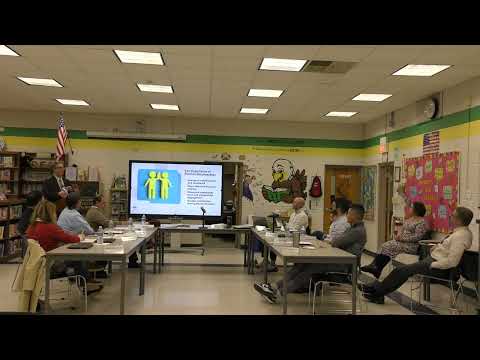
Greg Somjen, the lead presenter identified as part of the architects' team, summarized educational and infrastructure needs at Rockaway Valley School: decades-old building additions with converted storage serving as instructional space, undersized art and music rooms, and ongoing roof and mechanical work. He said a prior 2024 referendum that covered many infrastructure items (about $15 million) failed and that the current proposals combine infrastructure and educational improvements.
The architects presented two mid-range educational concepts. Concept B1 proposes a roughly 7,200-square-foot addition (one music space plus several classroom expansions and interior renovations) with an approximate education-package cost of $10.1 million; combined with infrastructure expenses (about $16.6 million) that would bring a full referendum near $26.7 million. Concept B2 expands the addition to about 9,100 square feet to include two properly sized music rooms (band and choral) and related circulation, with an estimated education cost of $11.9 million and a total referendum near $28.57 million.
Somjen said interior renovation items may qualify for state debt service aid (the architects will apply to the Department of Education and await a preliminary eligible cost letter), while exterior additions generally do not receive state aid. The district's financial advisor will provide refined household tax impacts after the state provides subsidy figures.
Board members pressed for programmatic and safety-based reasoning for the higher-cost option. Multiple trustees argued B2 better serves the district's established music program, reduces disruptive equipment moves between rooms and gyms, improves acoustics and ceiling heights for instruction, and reduces traffic and safety concerns in the middle-school wing. One trustee noted that the difference between the two concepts was about $1.8 million and described that incremental cost as reasonable when amortized over a multi-decade bond term.
Architects explained why the choral room added substantially to the package cost: the net 1,200-square-foot instructional space increases hard construction costs, and associated contingency and escalation percentages that scale with hard-cost increases raise the total.
Members of the public asked about tax impacts, enrollment projections and alternatives such as sending/receiving arrangements; the superintendent and architects said demographic and housing-start data inform five-year enrollment projections and that the planned May application to the state should produce a preliminary subsidy letter in a few months to allow accurate tax estimates to be published well ahead of any vote.
After discussion, board members signaled a preference for B2 for programmatic and safety reasons and directed staff and the architects to proceed with the state application process. The board also advanced routine facilities and finance motions later in the meeting (recorded roll-call votes) as part of regular business.
Next steps: the district will submit applications to the New Jersey Department of Education (applications were being prepared for submission), await preliminary eligible cost (PEC) letters that specify the state share for eligible interior renovation costs, and then set final referendum questions and a timeline after subsidy figures are known.