Get Full Government Meeting Transcripts, Videos, & Alerts Forever!
Get email alerts on the Education.cte topic
No spam. Unsubscribe anytime.
Presenter says Medford High CTE spaces must grow; culinary instructional kitchen about 50% undersized
Summary
A presenter told Medford Public Schools officials that many career and technical education (CTE) program spaces at Medford High School will need to be enlarged to meet state Chapter 74 guidelines, singling out the culinary instructional kitchen as about 50% too small and raising safety concerns.
A presenter told Medford Public Schools officials that several career and technical education (CTE) program spaces at Medford High School will need to be expanded rather than reduced under state Chapter 74 guidance, and that the culinary instructional kitchen is "undersized by almost 50%" compared with recommended square footage.
The presenter said the high school's CTE offerings are “really amazing” and come from a longstanding vocational tradition, with strong enrollment and instructors that allow programs to flourish. The presenter said there are 15 current CTE programs at Medford High and the district plans to add four more as part of the new project, which increases space needs.
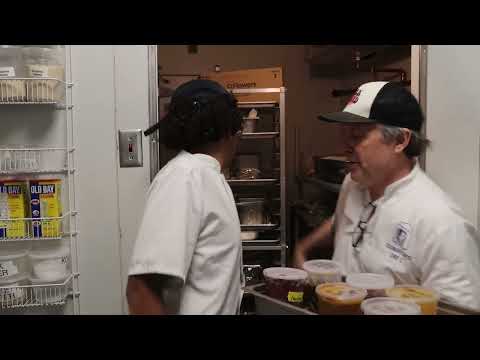
Using the culinary program as an example, the presenter distinguished between the dining area (the "beastro"), which has been recently renovated and is appropriately sized for patrons, and the instructional kitchen where students prepare meals. "That space is undersized by almost 50% as compared to what it should be," the presenter said, adding that students and staff are often working back-to-back and that the reduced floor area raises safety concerns for equipment operation and student movement.
The presenter said the district is assessing all Chapter 74 programs housed in the building against state guidance from the Department of Elementary and Secondary Education (DESE), which provides criteria for square footage per student. The presenter described the need to increase program space to meet those standards and to improve safety across the school.
A questioner, who opened the exchange by noting community assumptions that vocational spaces were large, said the figures were surprising and welcomed the clarification that state standards — not local preference — determine required sizes for CTE program spaces.
The presenter framed the changes as part of the new project design work; no formal vote or motion was recorded in the transcript. Next steps discussed were further design adjustments to meet DESE Chapter 74 guidance and to size instructional spaces to match current and projected enrollment.