Get Full Government Meeting Transcripts, Videos, & Alerts Forever!
Get email alerts on the Redistricting topic
No spam. Unsubscribe anytime.
Candidates split on Prop 4 and who should draw Utah legislative maps
Summary
At a county GOP forum, candidates debated whether the Utah Legislature should retain sole map-drawing authority or whether reforms (like Prop 4) were justified to increase responsiveness; one candidate called Prop 4 unconstitutional, the other said it sought constituent input.
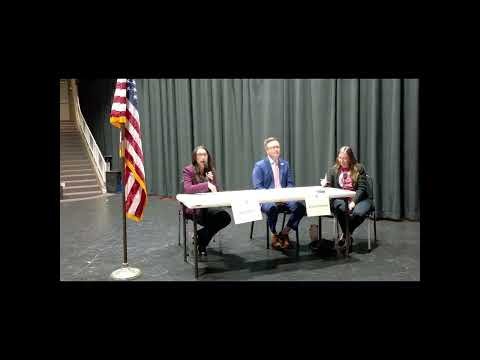
At a Utah County Republican Party forum, candidates answered repeated questions about redistricting authority, Prop 4 and SB200, drawing a clear contrast on how each would approach mapmaking.
One candidate, who identified herself as a state legislator with prior service in the House and Senate, said the state constitution assigns map drawing to the legislature. "Article 9 means the legislature. Period," she said, adding, "I support the repeal of Prop 4," and arguing that initiatives cannot change constitutional allocation of powers.
The other candidate, who described experience as a city council member, agreed the constitution vests map authority in the legislature but said the intent behind Prop 4 was to make maps more responsive to constituents. She cautioned that changes to compromise bills (for example, SB200) removed some protections that had been proposed in Prop 4 and that a more collaborative process might have avoided litigation and public distrust.
Audience members pressed both candidates about SB200 and the role of the Utah Supreme Court in the dispute. The state-legislator candidate characterized SB200 as a bipartisan compromise and placed the subsequent dispute with the state Supreme Court, saying the court's interpretation created a new contested layer to the process. The city-council candidate said greater collaboration on criteria and oversight might have prevented the conflict.
No legal action or vote occurred at the forum; the exchange offered delegates and attendees a clear sense of how each candidate would approach future redistricting debates and potential reforms.
The candidates’ exchanges are relevant to local delegates and voters who will decide party endorsements and influence primary-electability questions.