Get Full Government Meeting Transcripts, Videos, & Alerts Forever!
Get email alerts on the Public Safety topic
No spam. Unsubscribe anytime.
Election‑worker protection bills prompt sharp debate over 250‑ft firearm zones
Summary
HB 5533/SB 463, which would create 250‑ft exclusion zones for firearms around polling sites and drop boxes, drew support from advocates seeking to protect poll workers and opposition from gun‑rights groups and some residents who said the rules could unintentionally disenfranchise lawful permit holders.
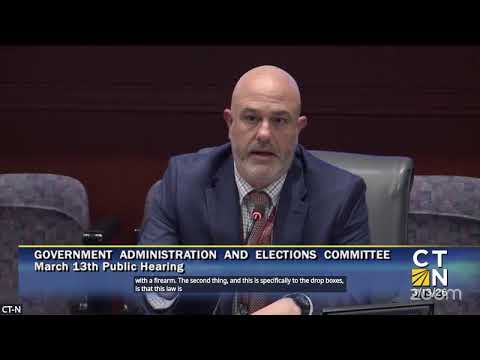
A proposal to create a 250‑foot restriction on firearms near ballot drop boxes and polling sites sharply divided witnesses at the Government Administration and Elections Committee hearing.
Supporters of HB 5533 / SB 463 said stronger protections for election workers and safe voting locations are necessary. Multiple testifiers asked the committee to take steps to prevent harassment and threats against clerks and volunteers.
"Protecting election officials and safeguarding election infrastructure are critical to maintaining secure and trusted elections," Lisa Amatruda of ROVAC told lawmakers while urging caution on measures that could leave towns without functioning officials if both registrars were suspended while under investigation.
Opponents argued the proposal risked criminalizing ordinary voters and preventing permit holders from lawfully entering municipal buildings. "We shouldn't have to give up our right to protect ourselves in order to exercise our right to vote," said Richard Souzer, a permit holder from East Hartford, urging carveouts for vetted carriers.
Holly Sullivan, president of the Connecticut Citizens Defense League, warned the measure could chill the participation of lawful carriers and volunteers who perform municipal duties late at night. Several permit holders and civic groups asked the committee to add specific exemptions for legally permitted carriers or to narrow the prohibition so it targets only demonstrable intimidation rather than simple presence.
Lawmakers asked for briefings on practical enforcement questions — including how municipal staff and voters would know when exclusion zones are active — and acknowledged the committee must weigh worker safety against access and potential unintended enforcement consequences. No vote was taken at the hearing.