Get Full Government Meeting Transcripts, Videos, & Alerts Forever!
Get email alerts on the Absentee Voting topic
No spam. Unsubscribe anytime.
Debate Intensifies Over HB 50001: Universal Absentee Voting vs. Internet‑Vote Security
Summary
Supporters told the committee HB 50001 would expand absentee voting and could raise turnout, while election officials and security experts warned against authorizing electronic ballot return without rigorous study, urging measures such as single‑envelope ballots, signature cure and phased rollout.
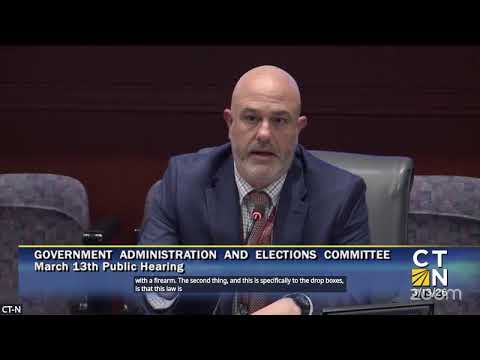
A wide coalition of students, nonprofits, town clerks and election experts urged the Government Administration and Elections Committee to implement no‑excuse absentee voting, but the hearing turned contentious over a related provision that would authorize electronic ballot return for limited groups.
"This bill would allow Connecticut to examine our own elections under a close lens and figure out how exactly we can go about increasing our dismal turnout rates," Audrey Nichols, a University of Connecticut junior, told the panel in support of HB 50001’s study of turnout and options to increase youth participation.
Town clerks and administrators urged practical reforms to accompany universal absentee access. Peter Smith, co‑chair of the Connecticut Town Clerks Association, recommended a single‑envelope absentee packet, barcodes for online applications and a voter signature cure process that would reduce rejected ballots and help clerks process the larger volume of mail ballots.
"A simplified ballot packet and clearer instructions would go a long way toward reducing the most common errors that lead to ballot rejection," Smith said, urging state funding for the added workload.
But cybersecurity and elections experts warned the committee not to authorize electronic ballot return without more study. Benjamin Fuller of the voter center said risk‑limiting audits are valuable and urged the committee to pilot RLAs on federal even years; he warned that internet voting "cannot provide acceptable security for state elections" and urged a study group before any adoption.
Public interest groups echoed the warning. "It has been the scientific consensus for decades that internet voting is not securable by any known technology," Liz Yakabuchi of Public Citizen told the committee, urging deletion of the electronic‑return language in HB 50001.
Advocates for victims of ballot harvesting urged safeguards. "The application process is the gateway drug for ballot harvesting," Cali Hileman of Bridgeport Generation said, urging that absentee ballot applications and returns stay strictly in the hands of voters and election officials to avoid preying on vulnerable voters.
Secretary Thomas’s office submitted written testimony recommending a phased, funded rollout with ballot curing and tracking and operational funding for town clerks. The secretary urged measures to ensure the transition is secure and manageable.
The committee did not vote on HB 50001 at the hearing. Lawmakers signaled support for no‑excuse absentee voting but face unsettled choices about electronic transmission, audit procedures and operational funding before the reform could be implemented for the 2026 elections.