Get Full Government Meeting Transcripts, Videos, & Alerts Forever!
Get email alerts on the Climate Adaptation topic
No spam. Unsubscribe anytime.
Commission forwards wastewater and water systems climate adaptation plan to City Council
Summary
The Santa Barbara Water Commission voted unanimously to recommend that City Council adopt the final draft Wastewater and Water Systems Climate Adaptation Plan, which prioritizes wastewater flood and salinity risks and calls for near-term studies and $50–$130 million in future infrastructure work.
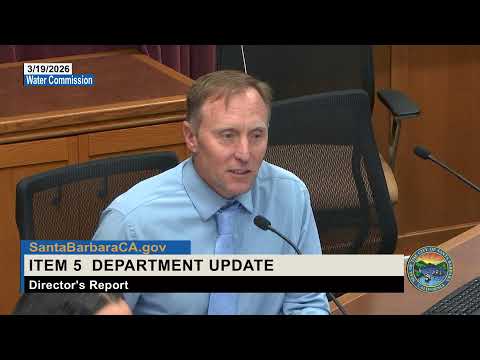
The Santa Barbara Water Commission voted to forward the final draft Wastewater and Water Systems Climate Adaptation Plan to City Council for consideration, following a presentation by Melissa Hetrick, adaptation and resilience manager in the city's Sustainability and Resilience Department.
Hetrick told commissioners the plan, prepared to address sea-level rise, flooding, erosion and wildfire impacts, finds the highest near-term risks in the wastewater system—particularly flooding-driven inflow and infiltration and seawater intrusion that can incapacitate biological treatment. She said the plan outlines phased adaptation triggers tied to amounts of sea-level rise and monitored conditions such as salinity and frequency of flooding.
The plan recommends immediate actions to reduce inflow and infiltration—including sealing manholes, lining pipes, continuing CCTV inspections and smoke testing—and near-term studies to evaluate options such as wet‑weather storage or equalization basins and converting low‑lying gravity mains to pressurized service where needed. Hetrick said the city plans follow-up studies costing about $2–$3 million and estimates infrastructure investments in a wide range between $50 million and $130 million over time, to be funded through a mix of state and federal grants, low‑interest loans, municipal bonding and existing capital programs.
Commissioners pressed staff for clearer numeric "triggers" and for better cross‑referencing to related plans. Hetrick pointed the commission to figure ES‑8 in the executive summary, which maps phase thresholds to sea‑level rise amounts, and said staff will refine numeric thresholds and monitoring approaches as part of follow‑on studies. Several commissioners asked that the plan explicitly note where water‑supply risks are addressed elsewhere; Hetrick said drinking‑water supply vulnerabilities are covered in the Urban Water Management Plan, and that the adaptation plan is asset‑focused and found fewer short‑term risks to deep groundwater drinking supplies.
The presentation also noted regional coordination opportunities. Hetrick said Montecito Sanitary District has asked to begin discussions about sending flows to the city for treatment, and staff said regionalization may align with long‑term adaptation efforts.
A motion to forward the commission's recommendation to City Council to adopt the plan passed on roll‑call vote with Commissioners Snider, Young, Cooney, Vice Chair Davis and Chair Keller voting yes. The City Council is expected to consider adoption on April 14.