Get Full Government Meeting Transcripts, Videos, & Alerts Forever!
Get email alerts on the Antitrust And Affordability topic
No spam. Unsubscribe anytime.
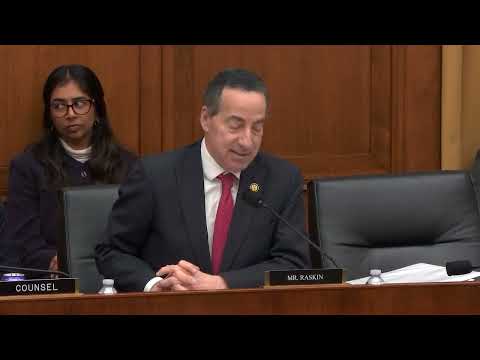
Ranking Member Mr. Raskin Condemns Economic Pain, Urges Antitrust Oversight
Summary
Ranking Member Mr. Raskin used his opening statement to link rising prices, cuts to social programs and alleged antitrust enforcement failures to an affordability crisis, and he urged the committee to oversee recent antitrust settlements and exemptions.
Ranking Member Mr. Raskin opened the House Committee hearing by saying a "majority of Americans feel like they're getting priced out" and warned that rising costs for food, housing and energy are forcing many families to skip meals or basic medical care. He said "around 82 million people, are skipping meals or basic health care in order to pay for utilities."
Mr. Raskin framed the problem as the product of administration policy and corporate concentration. He said prices for food staples rose in 2025 and that "whether you rent or own housing is becoming more unaffordable for the working middle class." He also said gas prices "have shot up 25%" in recent months and tied that increase to U.S. military action and disruptions in shipping routes.
Turning to antitrust enforcement, Mr. Raskin criticized the Department of Justice's recent settlement with Live Nation/Ticketmaster, calling the deal "obviously corrupt" and saying it will not "lower the exorbitant prices" consumers pay for live events. He argued that the administration has "waived through giant mergers" in real estate and other sectors and asserted that some landlords "conspired to set the rent that you pay for your home."
Mr. Raskin also faulted the White House and congressional Republicans for cutting programs he said help make health care and basic needs affordable, listing SNAP, children's health insurance, Medicaid, Medicare and funding for rural hospitals among services he said have been reduced or are at risk. He cited a Federal Reserve study he said shows "90% of these costs were paid by American companies and American consumers," adding that tariffs have effectively raised costs for households by about "$2,500" on average.
On oversight, Mr. Raskin said that key enforcement voices have been removed from the Antitrust Division, naming the abrupt dismissal of Assistant Attorney General Gail Slater as an example. He said Roger Alford, described in his remarks as a deputy who "was fired for raising concerns," implored the committee to conduct oversight of the division.
Mr. Raskin contrasted the financial gains of technology billionaires with ordinary household burdens, saying several high-net-worth tech figures "made $288 billion in less than one year" while average Americans bore substantial price increases. He also stated that military action in the Middle East has a human and fiscal cost, referencing both "more than $1 billion a day" (and, elsewhere in the statement, saying "$2 billion a day") and citing casualties he said included "13 American lives" and "more than a thousand Iranian lives." The transcript contains both figures for daily cost; the committee record did not resolve which figure is accurate.
He closed by questioning the committee's decision to spend time on a "niche antitrust exemption" related to shipping when, in his view, broader enforcement and affordability issues demand attention, and he called on members to carry out oversight of antitrust enforcement before more harm occurs.