Get Full Government Meeting Transcripts, Videos, & Alerts Forever!
Get email alerts on the Literacy Assessments topic
No spam. Unsubscribe anytime.
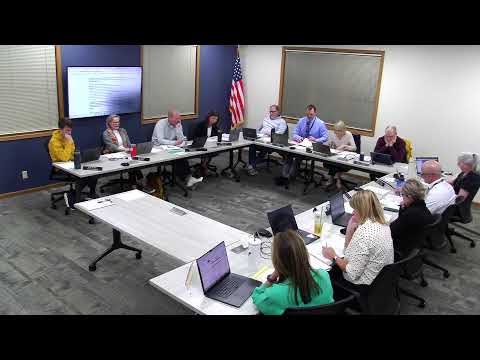
River Falls School Board hears mixed literacy benchmark results; administrators outline interventions
Summary
District leaders reported ambitious proficiency goals and new buildingwide ACT-like assessments; middle- and high-school staff said winter benchmarks showed strengths in some standards but notable weaknesses in 11th-grade summarization and argument-evaluation standards, and described expanded literacy electives and plans for targeted interventions.
River Falls School administrators presented building- and district-level literacy goals and assessment plans to the school board, and described both progress and areas of concern in winter benchmark results.
At the middle-school level, administrators described a districtwide goal that "100% of my middle school students will be achieving the target standard" (where a target is rated a 3 on the district proficiency scale). Mr. Chapman and other staff explained the data protocol teachers follow — "visualize, observe and analyze, infer and act" — and said teachers are calibrating scoring across classrooms so a proficient score looks similar from teacher to teacher. Staff emphasized the use of half-step grades (for example, 2.5) to show incremental student progress.
At the high school, staff described a buildingwide goal for all students to sustain mastery of reading comprehension or achieve 10% growth annually. Lisa and other high school leaders said they administered fall and winter building assessments that mirror ACT-level items and found concerning winter results for juniors (11th grade) on standards tied to summarization (R.1 and R.2) and on evaluating arguments (R.8). "We were very disappointed by our results... we own it not only in terms of timing," a high school administrator said, adding that the tests yielded useful data to target instruction.
District leaders said they will expand literacy electives from two sections per year to four (one per term) so students identified in benchmarks can receive targeted instruction throughout the year. Teachers described classroom strategies such as the HUGS routine (highlight, underline, gloss, summarize) and repeated formative practice with ACT-style passages; staff also said they plan to increase calibrated scoring, use PLC notebooks to track student progress and pursue a fall practice ACT to build student familiarity and accountability.
Administrators acknowledged implementation challenges: timing of low-stakes benchmarks (students may not take fall or winter practice tests as seriously), technical difficulties when administering online assessments, and limits in immediate intervention capacity. The board was told that staff are building tiered supports to move from schoolwide monitoring to student-by-student interventions.
No formal board action was taken on instructional procedures during the meeting; staff said they will return with continuing progress updates and results after spring testing.