Get Full Government Meeting Transcripts, Videos, & Alerts Forever!
Get email alerts on the Special Education topic
No spam. Unsubscribe anytime.
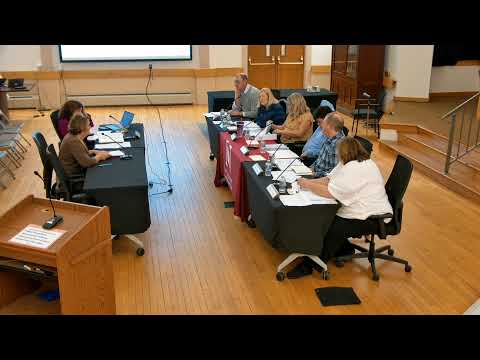
Narragansett officials warn special-education costs will press the FY2027 budget
Summary
District officials told the school committee that out-of-district tuition, transportation and underfunded state excess-cost reimbursements are major drivers of the FY2027 budget pressure for special education, and described staffing reallocations and contingency plans for preschool capacity.
Narragansett school officials told the committee that special education remains a leading pressure on the FY2027 school-based budget, driven by out-of-district tuition, mandated transportation and partially funded state reimbursements.
"Special education is regulated by both federal and state laws and all students who are eligible must be provided a free appropriate public education," Melissa, the district student services leader, said while outlining current IEP counts and staffing plans. She said the district pays tuition for students who require more restrictive clinical placements and is often responsible for transportation when students attend programs outside the district or are placed by child welfare agencies. "Anyone we send out of district, we would be responsible for transportation in both directions," she said.
Pete and Dr. Cummings described the state—xcess-cost reimbursement, which is intended to offset expenses exceeding a multiple of per-pupil costs. Officials said the categorical grant has been underfunded historically and the governor dded a modest increase in the proposed budget. "That fund has been funded at less than 50% over the last 10 years," Dr. Cummings said, adding the governor's proposed budget included roughly $2 nd $3—arefully targeted million more for the fund but not full funding.
Committee members pressed for clarity on timing and formula changes. Officials said a state blue-ribbon panel proposed changes to the funding formula that could direct more dollars toward special education, multilingual learners and CTE, but where the money would come from remains unresolved. The district noted it submits excess-cost applications in the fall and receives anticipated amounts from the state in January.
Locally, Melissa described modest staffing adjustments intended to shift supports into classrooms rather than pull-out intervention models. The district expects a net reduction of about 1.5 FTE overall; a 0.4 special-education reduction is being reallocated to a math intervention position to provide in-class support at the middle school. "When students have time and opportunity with their own teacher with the right level of support, they are finding more success," Pete said.
Melissa also summarized transition services: local transition-academy enrollment has fluctuated and adult-services coordination is necessary when students approach the statutory limit for school services. She said Rhode Island now allows services through the 22nd birthday and the district coordinates closely with BHDDH and vocational agencies to ensure smooth post-school transitions.
The committee asked the administration to continue monitoring state-level changes and return with updated state-aid estimates as part of the next-night review of transportation, technology and operations.