Get Full Government Meeting Transcripts, Videos, & Alerts Forever!
Get email alerts on the Utility Rates topic
No spam. Unsubscribe anytime.
West Sacramento adopts multi‑year water and sewer rate increase after Prop 218 protest tally
Summary
After a public hearing and a tabulation of 195 written protests, the West Sacramento City Council adopted a five‑year water and sewer rate schedule and expanded low‑income bill assistance, saying increases are needed to fund aging infrastructure and meet regulatory requirements.
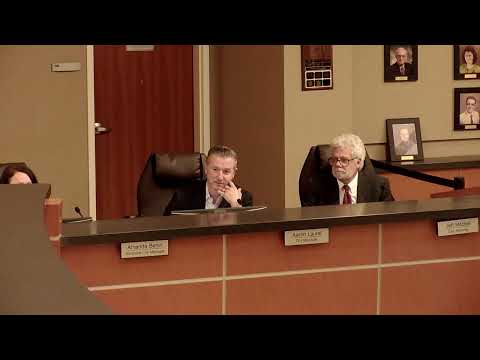
The West Sacramento City Council voted to adopt new water and sewer rates on March 18, 2026, after staff told the council the Proposition 218 protest threshold was not reached and council members approved Resolution 26‑24 by roll call.
Staff and consultants told the council that the city’s water and sewer systems are aging and need immediate investment. Public Works Director Rebecca said the George Kristoff water treatment plant produces about 11 million gallons a day and the city maintains more than 200 miles of water mains; she said many assets exceed their expected lifespans and listed near‑term projects including a $7.2 million effluent‑meter vault and a $6 million south sewer lift station. HF&H consultant Rick Simson summarized a cost‑of‑service study and told the council staff recommended a mid‑level capital program of about $8.4 million per year, partially debt‑funded, with front‑loaded rate increases to restore reserves and fund projects.
The city mailed Proposition 218 notices to property owners and customers earlier in the year and received written protests and objections. Finance director Roberto Raper and staff reported 185 written protests and 89 written objections by the Feb. 19 deadline and continued to accept protests through the hearing. After a recess to tabulate additional submissions, the city clerk reported a final protest count of 195 — far short of the majority parcel threshold of 8,891 required to block the rates. The clerk announced, “The final protest counts was 195.”
Council members voted to adopt Resolution 26‑24 implementing the rate schedule presented in the Proposition 218 notice. Roll‑call voting recorded affirmative votes from the council members present. (Recorded vote: Council member Alcala — yes; Council member Early — yes; Mayor Pro Tem — yes; Mayor Guerrero — yes.)
What the rates do and why staff recommended them: Consultants and staff said current rates have not kept pace with rising operation and capital costs and that reserve levels would be depleted under the status quo. The recommended rate path balances rate increases, use of reserves and debt financing to fund a prioritized five‑year capital improvement program and to maintain minimum fund balance targets. Staff emphasized that water and sewer enterprise funds must cover expenses for those services and cannot be used for other city services.
Affordability measures: To mitigate customer impacts, staff proposed expanding the low‑income rate assistance program (LERA). The council approved a staff recommendation to raise the monthly water/sewer credit for eligible households from $3 to $18 (plus a $2 refuse credit), and to add a second tier for fixed‑income seniors (62+) with eligibility at up to 250% of federal poverty and a $15 water/sewer credit. Staff said the program would be funded initially from Measure K appropriations and revisited annually as part of the budget process.
Public reaction: Dozens of residents spoke during the public hearing. Several commenters urged greater transparency and questioned whether general tax revenues or staffing changes could reduce the need for rate increases. HOA representatives described direct impacts of crime and insurance‑related assessments; one speaker estimated $400,000 in damages from an intentional flooding event. Many residents said the increases will burden seniors and ratepayers on fixed incomes.
Next steps and context: Staff and the council said the schedule adopted by the council represents maximum allowable rates for the next five years; each year the council may revisit rates and do less than the maximum but not more. Staff also noted the city had not completed a full rate study since 2017 and the last rate implementation was in 2021.
Legal and procedural notes: The council first considered a resolution responding to written objections under AB 2257 and then recessed to tabulate protests. Because protests did not reach the majority‑parcel threshold required under Proposition 218, the council proceeded to adopt the rates. The council also approved the expanded low‑income assistance program.