Get Full Government Meeting Transcripts, Videos, & Alerts Forever!
Get email alerts on the Budget Housing topic
No spam. Unsubscribe anytime.
Redondo Beach mayor warns $3.5 million shortfall, says state housing mandates threaten commercial land and local planning
Summary
Mayor Jim Light told an early‑morning audience the city is facing a $3.5 million deficit, is using reserves to balance operations, and that state housing overlays are converting commercial parcels into market‑rate housing—threatening local planning and future revenues.
Mayor Jim Light said Redondo Beach is facing a $3.5 million budget shortfall and is using reserve funds to balance its operational budget, a move he called unsustainable if conditions do not improve.
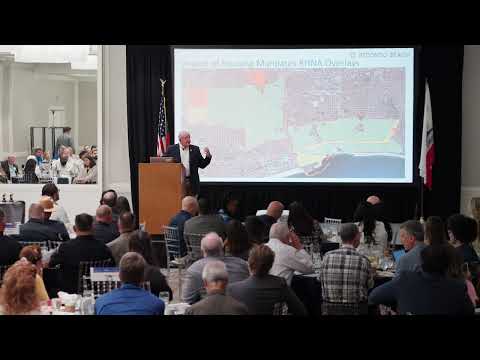
Light said state housing mandates and regional allocation overlays are converting commercial and industrial parcels to residential zones in Redondo Beach, reducing the city's ability to generate commercial revenue and constraining long‑term planning. “We are in a $3.5 million deficit position,” he said, and described the budget as “austere.”
Why it matters: Light framed the combined fiscal and land‑use pressures as a direct threat to the city's economic sustainability. He cited an internal economic analysis finding that, on average, commercial development yields about $7 more per square foot in revenue than residential development, and said overlays are producing market‑rate—not affordable—housing in many redevelopment sites.
The mayor also highlighted uncertainty around the AES property, which remains in bankruptcy proceedings and prevents the city from defining a redevelopment plan for that site. He urged residents to press state legislators for relief from housing mandates that, he said, fail to account for local conditions.
Light raised separate concern about possible federal base realignments, saying rumors that the Space Force acquisition arm could relocate from the local LA Air Force Base would have a ‘‘devastating’’ economic ripple effect for residents who depend on aerospace jobs.
The mayor said the city is preparing transportation and land‑use responses: the Environmental Impact Report for a planned Metro extension is expected this fall, and the city is pushing for a boulevard alignment that, according to Light, would generate more ridership despite higher upfront costs.
Light closed by emphasizing his administration's priorities for 2025: fiscal sustainability, a second phase of the general plan focused on commercial corridors, permitting automation to speed approvals, and active outreach to retain local economic activity. He asked residents to communicate with state legislators about the local impacts of housing mandates.
Next steps: The mayor said the city will continue work on the general plan phase two, and urged public engagement on the Metro EIR and state housing relief efforts.