Get Full Government Meeting Transcripts, Videos, & Alerts Forever!
Get email alerts on the Homelessness Outreach topic
No spam. Unsubscribe anytime.
Marco Cardenas tells Vallejo commission survey of 228 unsheltered men shows outreach gaps, urges housing-plus-services
Summary
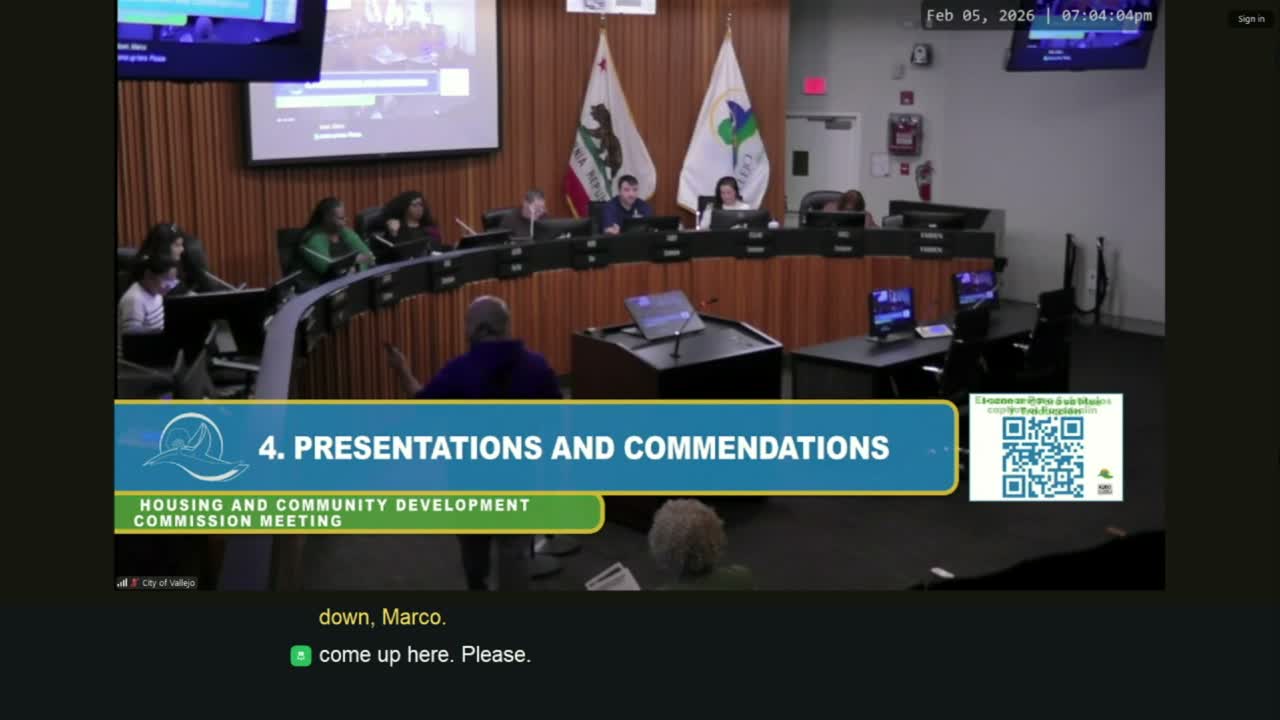
At a Feb. 5 meeting, Pathfinders for Hope founder Marco Cardenas presented survey results from 228 unsheltered men in Vallejo, saying many want help but distrust outreach; commissioners recommended refining his request before forwarding data to City Council.
Marco Cardenas, founder of Pathfinders for Hope, told the Vallejo Housing & Community Development Commission on Feb. 5 that a survey he conducted with 228 unsheltered men shows widespread distrust of outreach and gaps in services, and urged the city to pair housing with addiction and trauma‑informed supports.
Cardenas said many respondents told him they want help but that outreach often fails to follow up. “I got 113 men of the 228 men who said yes — they want to receive help,” he said, adding that he observed repeated negative interactions with agencies and a high rate of declined services. He said eligibility rules, language barriers, lack of transportation and limited pet‑friendly options block access to programs.
Why it matters: Cardenas argued that prolonged unsheltered episodes increase public costs — hospitals and jails — and that a Housing First approach must be combined with ongoing recovery services. “Housing first is a must. But also handle the addiction,” he told the commission, describing a multi‑module program he calls a “stability navigation” model that pairs housing navigation, counseling and employment outreach.
Commissioners pressed for details on the survey and the program model. Vice Chair Jackson asked about timing and documentation; Cardenas said he completed the survey in August 2025 and that he collects responses using a digital platform while conducting outreach. Commissioners and staff urged Cardenas to prepare a concise data packet and a narrower, actionable ask if he seeks City Council funding or formal support.
A motion by Vice Chair Jackson to forward Cardenas’s data‑only presentation to City Council was made and seconded, but commissioners later withdrew the motion after council representatives and staff urged that the presentation include additional context and coordination with county and housing authority partners. The commission’s chair thanked Cardenas and encouraged him to return with a focused request.
Cardenas also emphasized substance‑use findings: he reported a high prevalence of current alcohol or drug use among respondents and said many told him they would be willing to stop using if they had stable housing. He urged outreach led by people with lived experience and cited his nonprofit’s partnership with Stronger Roots Housing — a for‑profit housing operator he identified as a placement partner.
Next steps: Commissioners asked Cardenas to prepare a shorter, evidence‑backed package for council and to provide maps and documentation of his survey sample. Staff and the council liaison offered to help coordinate next steps and suggested Cardenas submit materials to City Council through the liaison for consideration.