Get Full Government Meeting Transcripts, Videos, & Alerts Forever!
Get email alerts on the Governance topic
No spam. Unsubscribe anytime.
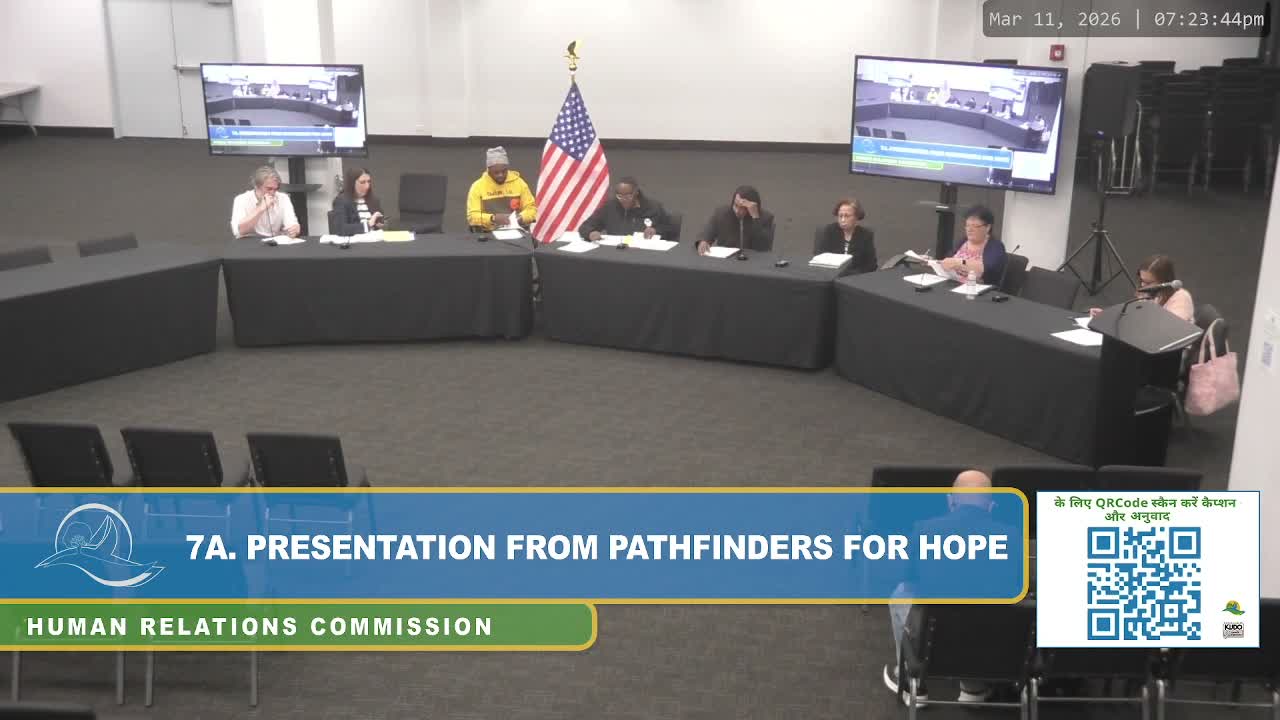
Vallejo Human Relations Commission advances 2026 work plan for council review, plans April adoption vote
Summary
Commissioners discussed a six‑phase 2026 work plan grounded in municipal code chapter 2.4 and agreed to collect edits and place the plan on the next meeting agenda for adoption and submission to city council; legal counsel reminded commissioners that adopted work plans typically require council approval and may need budget allocations.
The Vallejo Human Relations Commission discussed a proposed 2026 work plan that lays out a six‑phase community engagement and impact framework and agreed to bring a final adoption item to the commission’s next meeting for submission to city council.
Chair Davis presented the draft mission and vision—rooted in municipal code chapter 2.4—and described Phase 1 internal alignment (establish leadership and subcommittees), Phase 2 community listening and needs assessment, Phase 3 communication and visibility, Phase 4 policy recommendations and monitoring, Phase 5 partnership and mediation, and Phase 6 reporting, accountability and dashboards tied to equity indicators.
Why it matters: Commissioners said a clearer work plan could help the commission move beyond ad hoc efforts and provide a structured way to recommend policies, engage residents across Vallejo’s districts and report quarterly to council. Several commissioners noted that the commission only meets quarterly, which limits the pace of implementation and argued for a focused set of priorities this year.
Legal and logistical constraints: City legal counsel advised that, if the commission formally adopts a work plan, the plan will typically need city council approval before the commission implements funded activities. Counsel also noted that activities that require space, staff time or other budgeted items (for example holding public meetings in multiple districts) may require additional council or staff approval. A city attorney summarized: adoption "needs to be approved by city council before implementation" and practicalities such as budget and staff time will affect timing.
Next steps: Commissioner (S6) moved to place the work plan on the next meeting agenda for adoption and to prepare it for submission to the city council; another commissioner seconded the motion. Commissioners agreed to provide written edits to staff member Jason for distribution and inclusion in the April meeting packet so the commission can vote on adoption and, if approved, send the plan to council for consideration.