Get Full Government Meeting Transcripts, Videos, & Alerts Forever!
Get email alerts on the Facial Recognition Policy topic
No spam. Unsubscribe anytime.
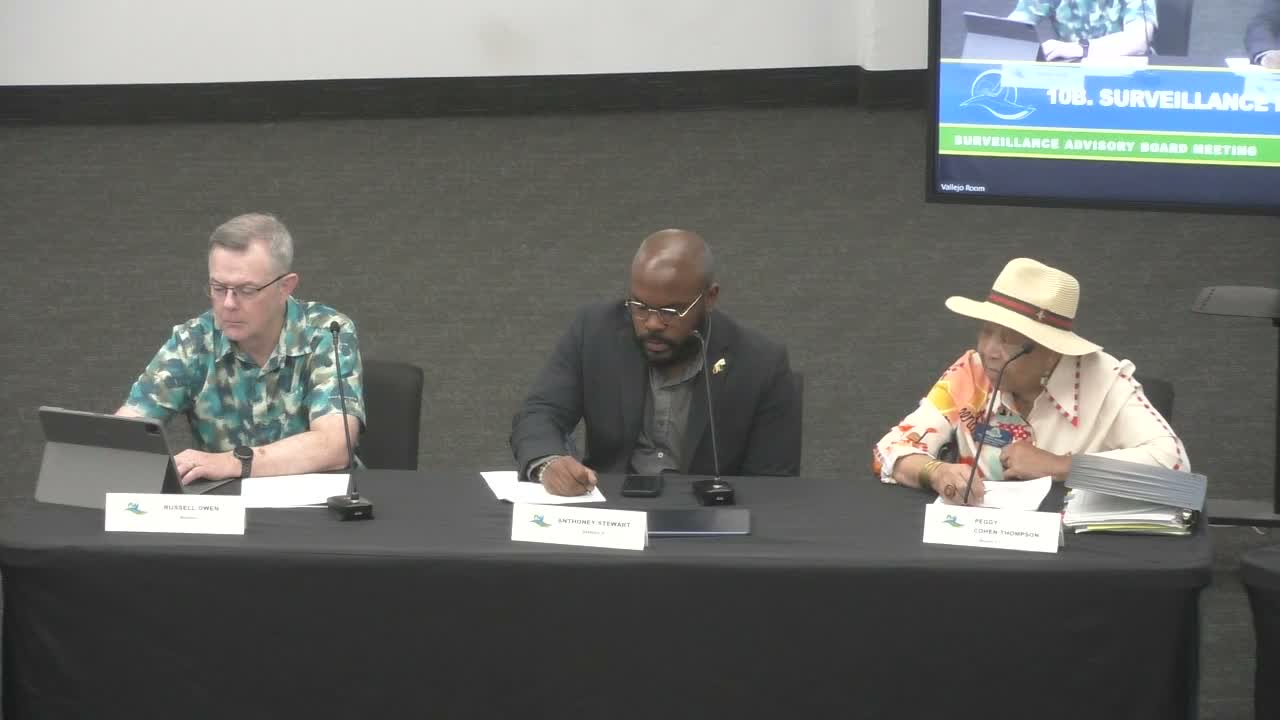
Surveillance advisory board votes to agendize facial-recognition policy for future meeting
Summary
The Vallejo Surveillance Advisory Board voted to place the development of a facial-recognition policy on a future agenda as the first step of a two-step city process; the board authorized staff to bring the item back for full deliberation at a later meeting.
The Vallejo Surveillance Advisory Board voted to agendize a proposal to develop a citywide facial-recognition policy, the board decided at a regularly scheduled meeting.
A board member said the question of whether to use facial recognition arises repeatedly when the board discusses surveillance technology and argued the city should have a standing policy rather than decide on a case-by-case basis. "Rather than answering the question each time we discuss surveillance technology, I think we should have a general policy," the board member said.
Under Vallejo’s two-step agenda process, the board can only vote tonight on adding the item to a future agenda; any substantive discussion or decision will occur when the item returns. City legal staff clarified this is the required first step and that tonight’s vote does not represent final action on a policy.
A board member moved to agendize "discussion on the development of a facial recognition policy," another member seconded the motion, and the board voted to place the item on a future agenda. During roll-call voting the record shows the present members voting in favor and the motion passed. The City Attorney advised members they may prepare bullet points or draft language for distribution to the secretary prior to the next meeting.
Board members discussed timing and attendance; the member who proposed the item said they might not attend the next meeting and offered to circulate proposed talking points to the secretary. Another member volunteered to prepare the background material if the original sponsor could not attend.
The item will return for full deliberation at a subsequent meeting, when the board can hear staff briefings, public comment and legal analysis before considering any formal policy language or action.