Get Full Government Meeting Transcripts, Videos, & Alerts Forever!
Get email alerts on the Flood Protection topic
No spam. Unsubscribe anytime.
Oversight board member recounts 2016 flooding and urges continued support for Virginia Beach flood bond program
Summary
At a March council briefing, the flood-prevention bond oversight board and the city's program manager reported design and construction progress, funding and outreach metrics, and plans to advance multiple projects; a resident-board member recounted severe local flooding from Hurricane Matthew and urged continued investment and transparency.
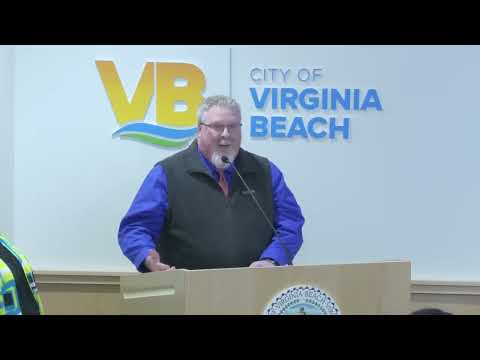
Scott Miller, a Windsor Oaks resident and member of the flood-prevention bond referendum oversight board, told the Virginia Beach City Council about losing more than a foot of water in his home during Hurricane Matthew in 2016 and urged the council to "stay the course" on the city's flood protection bond program.
Miller's testimony framed a quarterly presentation led by Jeff Waller, chairman of the oversight board, and the city's program manager from Jacobs Engineering, introduced in the meeting as Alicia Pica (referred to in the transcript as Lisa). Waller summarized the board's role, reminded the council the board reports quarterly per a council resolution, and listed recent staff briefings on stormwater operations, modeling, and a range of technical topics.
City and board officials emphasized recent milestones and public engagement. Waller said the program's website had about 23,000 views in 2025 (a roughly 40% increase from 2024), the program published 23 blogs (about 12,700 cumulative views) and 20 videos (about 177,000 views), and the highest-engagement topics included the Lake Windsor tide gates and the Bow Creek Stormwater Park. He also summarized active construction and projects in the February 2026 status report, noting Bow Creek Stormwater Park phase one is under construction, several neighborhood drainage and pump-station projects are underway, and phases 1B'1E of the Eastern Shore Drive bundle are in the award phase (phase 1E is a bond-referendum project).
Alicia Pica, the city's program manager for Jacobs Engineering, told council four projects moved to new design milestones this quarter, NEPA documents were delivered for a ferry-related project, and the city issued a request for qualifications for the Central Resort District design-build project. Pica reported the program has spent just under $150 million to date and said program cost estimates declined from about $1.552 billion to $1.503 billion after negotiations on the Windsor Woods/Lakes/Princess Anne Plaza mega-bundle, a reduction she attributed to contract negotiations for that bundle.
Pica and Waller also outlined 2025 accomplishments: roughly $50 million in spending, completion of two projects, initiation of two major construction projects, three procurements, and multiple projects advancing through design and preliminary engineering. On operations, Pica said stormwater maintenance spent roughly $14 million in 2025 for activities including lake dredging; ARPA funds were used to dredge 10 lakes (about $15 million in ARPA funds, with two dredges still in progress), and neighborhood drainage work touched 23 neighborhoods at a reported cost of about $32 million.
Waller noted the city has secured $73 million in grants to date, plans to submit applications for about $44 million more, and reported a low-interest loan of roughly $83 million from the Department of Conservation and Recreation targeted to part of the Eastern Shore Drive work. The board emphasized outreach plans, including field visits to Bow Creek and Lake Windsor and continued production of videos and readable monthly reports to help residents track progress.
Miller acknowledged tradeoffs the council faces, citing Pleasure House Point as an example where wetland mitigation credits were necessary to allow other bond projects to proceed; he said some residents were unhappy about tree loss and habitat impacts but that the mitigation credits enabled moving critical flood-protection work forward. "We're going to do tough things for the good of the entire city," Miller said, urging continued transparency and citizen outreach so residents understand the benefits of the investments.
Council members thanked Miller and praised staff for progress. One council member noted that the $50 million spent in 2025 equates to about five cents on real-estate tax bills for the year and discussed mill-rate context while acknowledging the program's visible construction activity.
The oversight board plans additional field visits and said it will continue quarterly reporting to council; staff said further permitting, procurement and construction notices are scheduled across the program and that the next detailed status documents are available in the February 2026 report the council received.