Get Full Government Meeting Transcripts, Videos, & Alerts Forever!
Get email alerts on the Economic Development topic
No spam. Unsubscribe anytime.
Planning Commission to consolidate business‑corridor recommendations, forms ad hoc work‑plan subcommittee
Summary
Staff summarized a City Council referral to review business corridors and mixed‑use areas and proposed five themes for recommendations. Commissioners endorsed consolidating memos into an executive summary, discussed permit 'sunset' ideas, vacant property registration, financing tools to create shovel‑ready lots and branding, and formed a three‑member ad hoc subcommittee to draft the work plan.
The Planning Commission reviewed a City Council referral asking the commission to examine the city’s designated business corridors and mixed‑use areas (including Sonoma Boulevard, the Downtown Waterfront District, Mare Island, and neighborhood corridors such as Tennessee Street and Springs Road) and to recommend ways to streamline development time and increase allowable density.
Planning staff (Kristen Pollock) said she had pulled five common themes from commissioner memos: 1) leverage existing state streamlining tools, 2) improve permitting transparency through a digital portal and KPIs, 3) reduce or eliminate parking minimums on major corridors, 4) apply a range of economic‑development financing tools to spur development and prepare shovel‑ready parcels, and 5) branding and beautification of key corridors (including coordination with Caltrans for I‑80).
Commissioners discussed additional tools including permit sunset or milestone requirements to discourage land‑banking, but staff and the city attorney noted vesting and extension rules and cautioned about unintended consequences. Pollock described a vacant property registration program for commercial buildings that now requires monthly monitoring reports; noncompliance can lead to administrative citations and fines (staff cited $200 per day or about $6,000 per month and a per‑violation cap). Commissioners also raised the high cost of bringing utilities to vacant lots and urged staff to include financing options to create shovel‑ready sites.
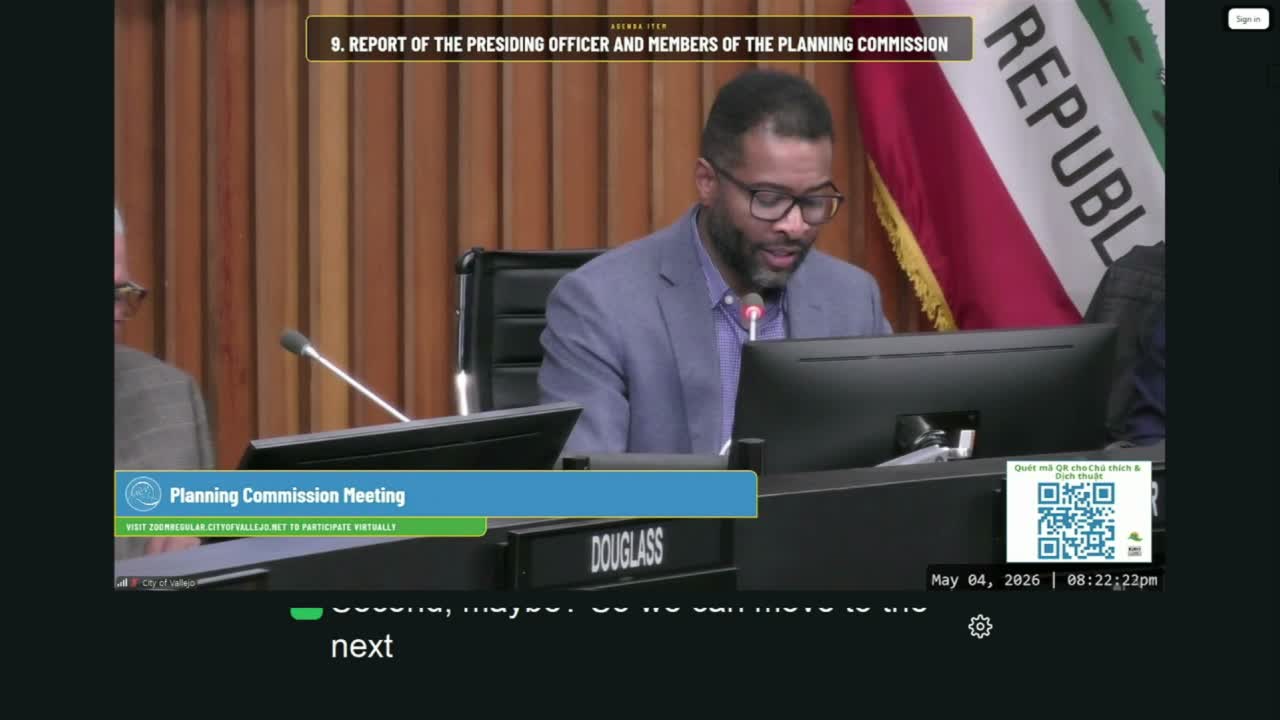
As a next step, staff proposed an executive‑summary cover sheet highlighting the top recommendations with the commissioners’ memos attached. The commission nominated an inaugural ad hoc work‑plan subcommittee (Taylor, Medeiros and Beasley Stansbury). Commissioner Blind moved the nomination, which was seconded and approved with six ayes.
What's next: Staff will compile the five takeaways into a short cover summary with memos attached, share the consolidated packet with commissioners and agendize it for the Economic Development Commission; commissioners were encouraged to attend the EDC meeting to answer questions.