Get Full Government Meeting Transcripts, Videos, & Alerts Forever!
Get email alerts on the School Discipline topic
No spam. Unsubscribe anytime.
Parents urge Anderson Community School Corp. to review discipline practices, cite possible racial disparities
Summary
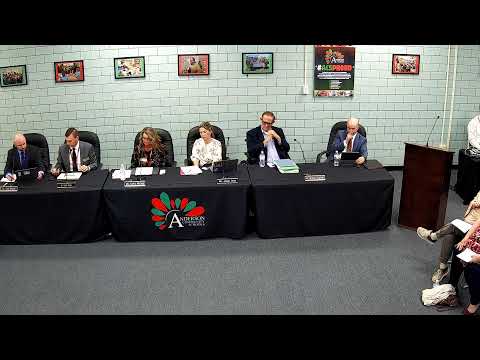
At the March 9 Anderson Community School Corp. board meeting, parents of sixth-grade students at Anderson Intermediate School urged the board to investigate discipline practices they say disproportionately affect Black and Brown students, questioned the use of probationary continued-education agreements (PCEAs), and requested public data and a meeting with the board and administration.
Natasha Burks, speaking at the Anderson Community School Corp. board meeting on March 9, said parents of sixth graders at Anderson Intermediate School are concerned that discipline is not applied fairly and that Black and Brown students receive harsher consequences for similar behavior. "When students feel they are being treated unfairly, it affects their confidence, their academic success, and their trust in our school system," Burks told the board.
Burks criticized the district's discipline matrix and the use of probationary continued-education agreements (PCEAs), which she said require families to waive due-process rights in order for a student to remain in school. "Parents should have clear information and fair options before being asked to sign away these rights," she said, and asked whether the district collects and reviews discipline data by race and whether suspension and expulsion rates at Anderson Intermediate are higher than at other district schools.
Burks gave specific case examples involving her son and another student, saying one child had "about 15" referrals and another "11" and that referrals were sometimes coded as bullying or intimidation when parents would describe the incidents as class disturbances. She said planned interventions—life coaches, counseling, or 504 accommodations—were not consistently provided before disciplinary actions escalated. She also asked for access to camera footage when a student faces pending expulsion and urged assurance that families would not face retaliation for raising concerns.
A board member said the board would follow up and offered to meet with the parents; that member also requested a copy of the materials the parents submitted. Dr. Kron asked whether families had taken the concerns to building administrators and what responses they had received. Parents said they had raised issues at the school level and described disagreements about how the discipline matrix was applied and about whether planned interventions occurred as promised.
The board did not take formal action at the meeting but accepted the written letter for inclusion in the official minutes and signaled willingness to convene follow-up meetings with parents and administration. Parents requested a public session to explain the discipline matrix, PCEAs, and behavior-intervention policies and asked that appropriate diversity and equity staff be present.
What comes next: Board members asked the parents to provide documentation and said they would coordinate next steps; no timeline for a follow-up meeting was set at the March 9 meeting.