Get Full Government Meeting Transcripts, Videos, & Alerts Forever!
Get email alerts on the Parking topic
No spam. Unsubscribe anytime.
Neenah staff advises pausing $20 million parking‑ramp plan, recommends smaller surface lot and agreement updates
Summary
Community Development Director Niforth told the Neenah Common Council there are just under 1,700 downtown stalls and that long‑standing easements obligate the city to reserve spaces for certain businesses; staff recommended removing a 570‑stall, $20 million ramp from the CIP in favor of a roughly 125‑stall surface lot and updated parking agreements with Plexus and Alta.
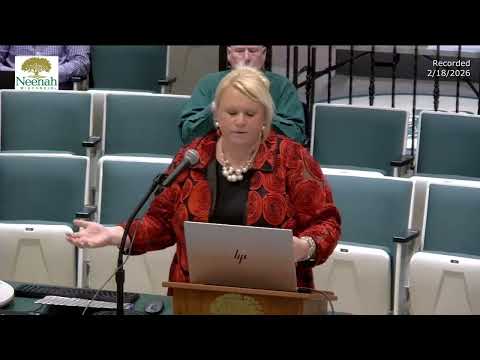
Community Development Director Niforth told the Neenah Common Council on Feb. 18 that the city’s downtown parking system includes just under 1,700 stalls and that long‑standing easements obligate reserved parking for several businesses.
Niforth said the ramp holds the largest single allocation but is ‘‘technically oversold at 104%’’ — a figure she said remains within common industry turnover benchmarks — and that the city still technically owes Plexus about 74 stalls dating to agreements from 2008. She described other allocations (Alta about 531 stalls with 57 on upper floors; Plexus currently obligated to about 295 spots after transfers) and said some privately leased lots, such as the Presbyterian Church lot, are not under city control.
The presentation traced obligations back to easements established in 1994 around the canal lot and to development steps taken when Alta and other firms located downtown. Niforth told the council the city had previously included a 570‑stall parking ramp in the capital improvement plan with an early‑2023 estimate in the $15–$16 million range; using an industry per‑stall midpoint of $35,000, staff had budgeted roughly $20 million for a 570‑stall structure.
But after reviewing inventory, contractual obligations and likely revenue, Niforth said staff concluded the full ramp ‘‘is not needed right now’’ and that parking fees alone would make financing such a project difficult. Instead, staff recommended several near‑term steps: amend Alta’s agreement, negotiate a single master parking agreement with Plexus (consolidating multiple older contracts), determine Ascension’s needs, remove the ramp from the CIP and reallocate roughly $1 million already borrowed in TID 10 toward acquiring parcels and building a lower‑cost surface lot with about 125 spaces. Niforth said such a lot would provide near‑term cushion and preserve the option to build a ramp later if demand increases.
Aldermen asked questions about sequencing. Alderman Palmo said it made sense to resolve agreements before buying property; Niforth agreed that clarifying actual business needs should guide acquisition or construction. Alderman Steiner asked whether the city must own parking; Niforth noted public‑private partnerships and privatization are common alternatives.
The presentation closed with staff proposing a longer‑term review of all parking agreements and improvements to permit tracking, noting that current permit administration relies on businesses keeping manual records.
Council did not take formal action on the staff recommendations that night; the presentation concluded and the meeting proceeded to other agenda items. The city’s next steps will include negotiating with Alta and Plexus and refining costs and timing before any return to the CIP process.