Get Full Government Meeting Transcripts, Videos, & Alerts Forever!
Get email alerts on the Transportation topic
No spam. Unsubscribe anytime.
Regional partners highlight Highway 37 bottleneck fixes, show diverging diamond simulation at Fairgrounds Drive
Summary
A project video and agency presentation illustrated a diverging diamond interchange at Fairgrounds Drive and near‑term and long‑term fixes for Highway 37, including shoulder‑to‑lane conversions, tolling for revenue, and a proposed elevated causeway to address flooding and sea‑level rise.
A narrated project simulation and a regional presentation on Highway 37 outlined a mix of near‑term measures and long‑range resilience work aimed at reducing chronic congestion and addressing sea‑level rise.
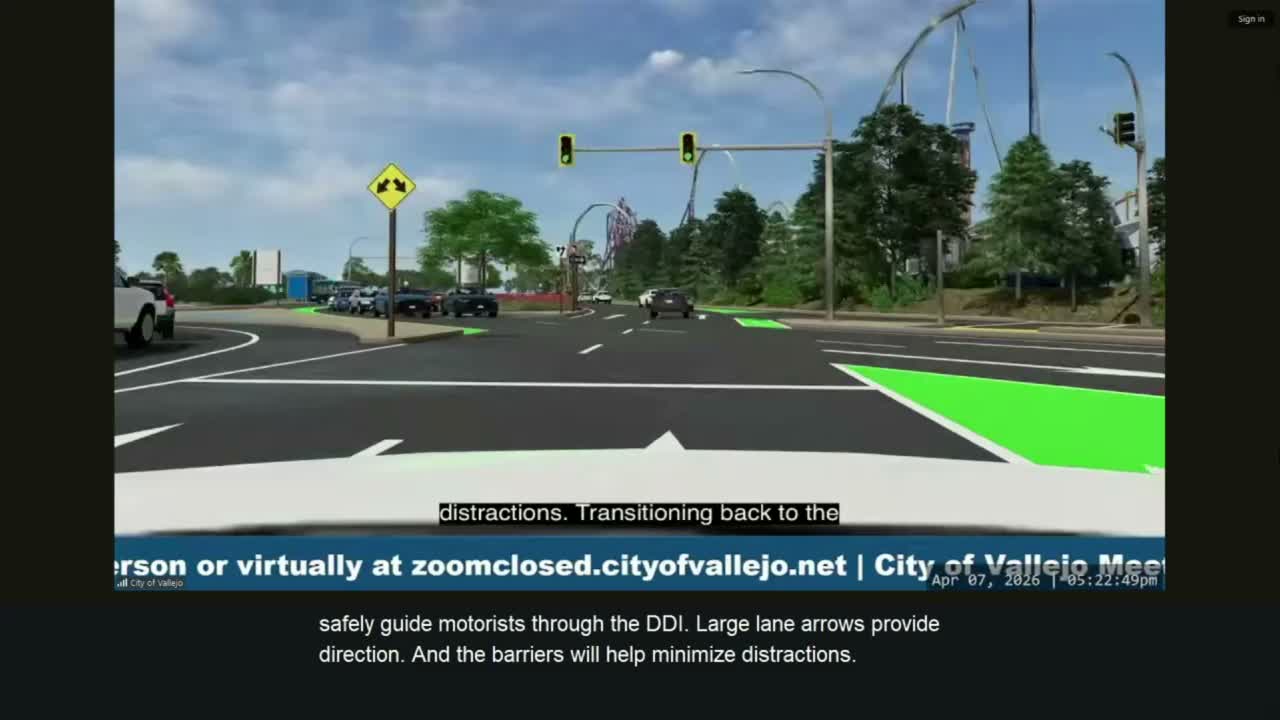
The video narrator described the proposed Fairgrounds Drive diverging diamond interchange (DDI) as offering "improved safety, enhanced mobility, and support[ing] economic growth in the city of Vallejo," noting features such as a protected center walkway, relocated bus stop adjacent to commercial areas, and a free left‑turn lane that reduces the number of signals motorists must pass through.
A Highway 37 project presenter said the 21‑mile corridor currently faces a 10‑mile bottleneck between Sears Point and Mare Island that can add "30 minutes to morning commute times and 80 minutes to the evening commute." Near‑term proposals include adding a lane in each direction by converting shoulders, instituting an HOV/carpool lane, and introducing tolling and discounts for low‑income drivers. The presentation also described a preferred long‑term solution: an elevated four‑lane causeway with bicycle and pedestrian paths and potential integration of rail, which officials said could take 15–20 years and require multibillion‑dollar funding.
Project planners framed tolling as a way to generate steady revenue for loan repayment, maintenance and to provide matching funds for future resilience work, while emphasizing equity measures such as staged tolling and low‑income discounts and a timeline that would delay toll collection until new transit alternatives are available. The presentation also noted $155 million in federal bipartisan infrastructure funds committed to a Marin County flood reduction project that is part of the corridor's resilience strategy.
Why it matters: Highway 37 links communities across the North Bay and is central to housing‑to‑jobs commutes; the mix of near‑term operational fixes, tolling and a long‑range elevated causeway aims to keep the route open during high tides and storms while improving transit options and bicycle access.
What’s next: Agencies said additional environmental review, design work and funding commitments are required; timelines presented estimated some near‑term shoulder‑conversion work could open within five years, while the full causeway would take longer and require substantial state and federal financing.