Get email alerts on the Special Education topic
No spam. Unsubscribe anytime.
District BCBA warns caseload unsustainable, urges second behavior analyst
Summary
Winchester’s behavior analyst, Giovanni Kataya, told the board the district has about 30 students requiring behavior-analytic services versus a typical BCBA caseload of 8–12, and urged hiring a second analyst to meet legal and ethical obligations.
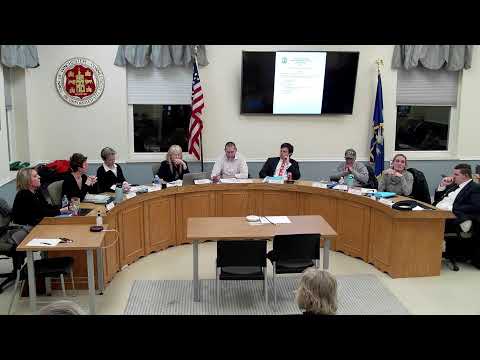
Giovanni Kataya, the district’s board-certified behavior analyst (BCBA), told the Winchester Public Schools Board on Feb. 26 that his caseload is roughly 30 students — far above the typical 8–12 students a BCBA manages.
Kataya explained the functional behavioral assessment (FBA) process he conducts, how he designs behavior plans, trains staff and analyzes outcome data. He said many referrals require intensive intervention and that the district’s single BCBA cannot both deliver direct services and maintain the ethical and documentation standards required by his certifying board.
"On average, a BCBA has a caseload of 8 to 12 students," Kataya said. "Currently Winstead has 30 students who need intervention or consultation from a behavior analyst. Without the assistance of an additional analyst, students won't get the quality services that they need and I will be working outside of the compliance of my code as well."
Kataya told the board that the district’s inability to provide timely services can have cascading effects: students placed out of district for specialized programs increase tuition and transportation costs for Winchester, and delayed or inadequate interventions may lead to behavior that interferes with learning for other students.
Board members asked clarifying questions about how BCBA responsibilities differ from data teams and special-education case management. District staff confirmed that some students requiring BCBA-level service have Individualized Education Program (IEP) protections, and that failing to provide services in an IEP can constitute a federal compliance issue.
What the board heard: - Current BCBA caseload: ~30 students. - Typical BCBA caseload cited: 8–12 students. - Proposed remedy: hire a second full-time BCBA (discussed as a new position in the FY27 budget) to provide assessments, staff training and improve in-district supports to reduce out-of-district placements.
Kataya’s presentation factored into the larger budget debate that evening: some board members supported keeping the BCBA position to preserve in-district services, while others sought cuts elsewhere to limit tax impact.
Quote: "Without the assistance of an additional analyst, students won't get the quality services that they need," Kataya said.
Next steps: The board will continue budget deliberations on March 3; the superintendent and special-education staff said they will explore program options and short-term mitigation while the board considers funding.
AI generated
The text on this page is AI generated. Summaries, highlights, analysis, and video transcripts are all produced from the original source material.
AI can make mistakes, so if you spot one, and we will fix it for everyone.
Note: the source content is unaltered by us. Any content source we link to, be it a video, an audio recording, or a document, is presented exactly as its publisher released it. That publisher is usually a government body, sometimes an individual official or another organisation.