Get Full Government Meeting Transcripts, Videos, & Alerts Forever!
Get email alerts on the Data Centers topic
No spam. Unsubscribe anytime.
Champaign County task force launches to study data‑center impacts, names vice chair
Summary
A newly formed Champaign County task force will examine water, energy, land‑use and community impacts of data centers, review model ordinances and invite utility and academic experts; the panel set meeting topics and confirmed Aaron Ezri as vice chair.
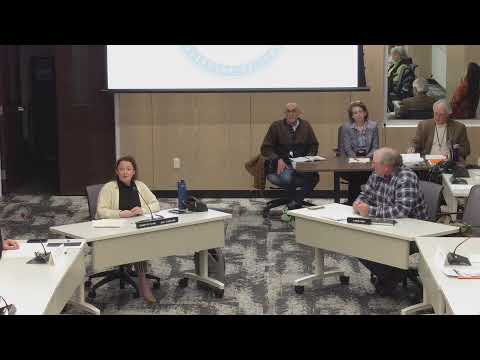
Champaign County officials on March 23 convened a task force to review data center activity and its potential impacts — particularly water use, energy demand and land use — and to prepare recommendations for the county’s Environment and Land Use Committee and full county board within roughly three months.
The panel, assembled by the county board and staff, will review the county’s existing data‑center ordinance, examine outside examples (notably Sangamon County and the City of Aurora) and hear from technical experts. "The purpose of this committee of course is to review data center activities and its impacts within our county and...prepare recommendations," the chair said as the meeting opened.
The task force heard a presentation and packet prepared by John Hall, the county’s director of planning and zoning, who described Sangamon County’s application materials and a commissioned impact analysis. "In the Sangamon County example...there’s over 400 backup generators at the Sangamon County site. If you can imagine the sound, the noise, and the pollution from 400 backup generators if they ever had to be on," Hall said, describing generators, substations, detention basins and other infrastructure in that very large application.
Members and staff stressed that Champaign County currently has only smaller, air‑cooled data facilities approved under its 2022 rules — generally tied to small solar arrays and reported in the meeting as roughly 2–5 megawatts and on the order of 20 acres — and that the county has not yet received any large hyperscale applications. "We don't...have any proposed plans for a large data center in Champaign County," staff said, while noting draft amendments would allow the county to scale its rules if needed.
Committee members debated how to define and regulate data centers. Staff proposed a 10,000 square‑foot processing footprint as a threshold; several members suggested regulating by electrical capacity (megawatts) instead, arguing the latter better captures operational scale. Participants cited regional examples to illustrate the range: speakers referenced Sangamon County (discussed in the packet as a several‑hundred‑megawatt project and hundreds of acres), a cited 636‑megawatt figure for a Sangamon proposal and news reports of proposed 1.8‑gigawatt projects elsewhere.
Environmental and community concerns, including water withdrawals from the Mahomet aquifer and potential impacts on local electricity rates and grid capacity, informed much of the discussion. Robert Herschfeld, director of water policy at Prairie Rivers Network (filling in for the organization’s climate policy director), stressed the need for statewide guardrails and transparency. "The Power Act…looks at water, energy use, transparency, community benefits agreements," Herschfeld said, noting a draft state proposal the group tracked sets regulated‑thresholds for hyperscale facilities.
Members flagged specific policy tools for the task force to consider: tiered thresholds tied to megawatts or processing area; community benefit agreements that require developer contributions to address infrastructure impacts; performance and environmental standards (noise, light, heat discharge); decommissioning plans; labor and housing impacts during construction; and limits on nondisclosure agreements in county negotiations. Several members suggested requiring developers to pay for any utility system upgrades needed to serve a large project.
County staff and several members proposed a series of focused sessions: (1) define "data center" and establish metric(s); (2) policy and literature review (Aurora, Sangamon examples and draft state Power Act); (3) water (Mahomet aquifer) and environmental standards; (4) energy and utility impacts (including a potential Ameren or utility representative); and (5) community benefits, labor and decommissioning. The committee asked staff to invite U of I experts, the Sangamon impact‑study author and utility representatives to upcoming meetings.
The task force also discussed a proposed moratorium on large data‑center applications: members said the Champaign County Zoning Board of Appeals recommended a moratorium unanimously and that the proposal will be considered by the county’s Environment and Land Use Committee and then the full county board; until the board acts, staff clarified, a moratorium is not yet in effect.
On administrative matters the group confirmed its meeting cadence, discussed FOIA/Open Meetings Act obligations for emails and texts about task‑force business, set rules for proxy usage and public participation, and scheduled the next meeting for April 13, 2026, at 6:30 p.m. By voice vote the committee also confirmed Aaron Ezri as vice chair.
The task force did not take formal action on ordinance language at the March 23 meeting; members emphasized they were gathering information and would refine draft amendments after expert presentations and additional review. The next session is to focus on defining the term "data center" and reviewing model policies shared by staff.