Get Full Government Meeting Transcripts, Videos, & Alerts Forever!
Get email alerts on the Conservation District topic
No spam. Unsubscribe anytime.
Spokane Conservation District credits partnerships and grants as Scale House Market and conservation campus expand services
Summary
Vicky Carter, director of the Spokane Conservation District, told County Commissioner Mary Brooks that a year-round Scale House Market and a conservation campus on a former rock quarry have generated more than $1.2 million in gross revenue and wide community use in the first six months, and that county rates-and-charges and grants leverage the district's programming.
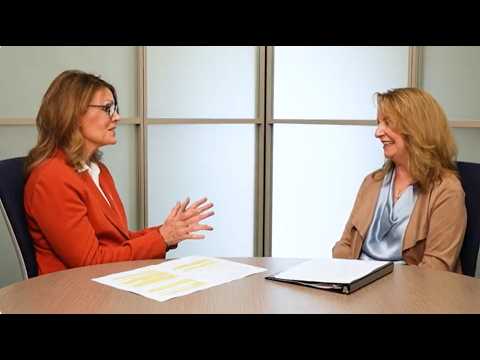
County Commissioner Mary Brooks interviewed Vicky Carter, director of the Spokane Conservation District, about the district's recent projects and funding model. Carter said the district, which has operated in Spokane County since 1941, focuses on voluntary conservation services including water, soil and forestry assistance and environmental education.
Carter described the district's Scale House Market, created in a repurposed building on a 50-acre former rock quarry the district bought in 2017. She said the market was developed in part from COVID-era food-distribution work with partners including a volunteer group called Four Roots and the district's own farm program. "In our first six months, we saw our gross revenues of over $1.2 million," Carter said, and the market represented over 125 small farms and vendors, drew nearly 50,000 customers and created about 15 new jobs in the first six months.
Carter noted additional community benefits: the market has a commercial kitchen and on-site refrigeration to support food entrepreneurs, is now SNAP/EBT-certified and is accessible by Spokane Transit Authority routes and senior-home group visits. "These are dollars that are staying right here in our own community," she said of sales tax and vendor revenues.
The district's conservation campus on the former quarry functions as a "living classroom," Carter said, with a food forest, walking trails, geology interpretation and demonstration sites for conservation practices. The site hosts longstanding programs such as an annual tree-and-seedling sale (running since 1974), youth and adult workshops, geology tours and community volunteer events.
Carter emphasized that the Spokane Conservation District is a nonregulatory political subdivision authorized under state law (RCW 89.08) and that it works in partnership with county government, nonprofits and agencies rather than enforcing regulations. She described the district's revenue mix as heavily grant-based: "76% of our revenue comes from grants," she said, and that partnership funding has enabled larger on-the-ground projects.
On the district's public funding, Carter said Spokane County provides about $2 million a year through a rates-and-charges mechanism; combined with matching grant funds, she said that contribution helps leverage a program portfolio she estimated could reach $16'$18 million annually, though she added much of that money flows through to project partners rather than staff costs.
The district is advancing a multi-phase campus master plan that includes expanded parking to meet market demand, additional trail and interpretive signage, and a feasibility study on short-term overnight stays (for example, yurts) to support destination visits tied to conservation work. Carter also said a local filmmaker will produce a historical documentary about Hangman Creek watershed restoration to document decades-long work with partners such as the Spokane River Forum.
Why it matters: Carter framed the district's model as leveraging limited county support into larger conservation outcomes through grants and partners and described tangible local benefits in food access, small-business incubation and habitat restoration. The district's projects combine direct services for landowners with public-facing education and economic activity that County Commissioner Brooks said the county views as a valuable return on investment.
The district plans to continue the Scale House Market and campus development while tracking outcomes such as customer numbers, vendor revenues and jobs created; Carter said she will report back as SNAP/EBT use and year-long visitor totals mature.