Get Full Government Meeting Transcripts, Videos, & Alerts Forever!
Get email alerts on the Career Technical Education topic
No spam. Unsubscribe anytime.
Mission Valley RO tells New Haven board CTE serves hundreds, relies heavily on state matching funds
Summary
Mission Valley RO leaders told the board that about 20% of seats and funding are attributed to New Haven Unified, that 50% of their budget depends on state matching grants, and that New Haven students earned hundreds of credits, certifications and thousands of internship hours last year.
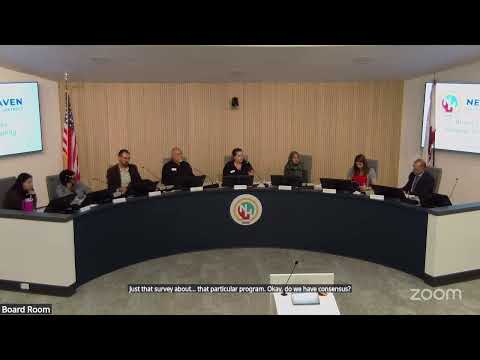
Mission Valley Regional Occupation (MVRO) leaders described to the New Haven Unified School District board on Aug. 12 how career-technical education programs are structured and how funding is shared among partner districts.
Tom Hansen, superintendent of Mission Valley RO, said the joint program runs roughly 58 course types across sites and that historic local funding shares for the joint-powers agreement were roughly Fremont 65%, New Haven 20% and Newark 15% to reflect enrollment and cost allocation. Hansen said about half of MVRO’s annual budget now depends on state matching grants such as the K12 component of Strong Workforce and the Career Technical Education Incentive Grant, making some revenues less predictable.
Dr. Cliff Adamsart provided New Haven-specific figures: New Haven represented roughly 20% of seats; about 916 New Haven students participated across MVRO last year, with approximately 814 served at James Logan High School. He said New Haven students earned 780 industry completion certificates, completed 8,654 internship hours, and were awarded roughly 1,039 college credits through articulated coursework; 727 students earned articulated college (TOG) credit.
"That number that you see in your budget every June is in the 50% of local, but there's another 20% that's represented by matching dollars that's coming from Sacramento," Hansen said, explaining why grant matches matter when budget planning.
Board members asked clarifying questions about program seats and district responsibilities; MVRO staff said some high-demand classes are taught at the Fremont center for cost reasons while many sections are replicated at James Logan to avoid transportation barriers.
The presentation closed with a note about strong industry partnerships: MVRO said it has more than 400 industry advisors and that many programs are articulated with community colleges, enabling students to earn college credits and industry-recognized credentials.
Next steps: Trustees accepted the report and did not take immediate action; staff and MVRO will continue coordination with principals and the district on program offerings and budget implications.