Get Full Government Meeting Transcripts, Videos, & Alerts Forever!
Get email alerts on the School Greening topic
No spam. Unsubscribe anytime.
Living Schoolyards Coalition urges LAUSD to use bond funds to cover fees and remediation for school greening projects
Summary
Nonprofit greening partners told the LAUSD Bond Oversight Committee that district fees, unanticipated remediation and ADA costs are eating grant funds and forcing scope cuts; they urged the district to establish a clear path for bond dollars to reimburse partners and preserve project scope.
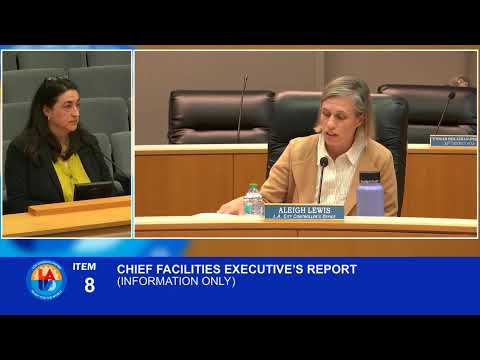
At a March meeting of the Los Angeles Unified School District Bond Oversight Committee, members of the Living Schoolyards Coalition and nonprofit partners urged the district to allow bond funds to cover district fees, environmental remediation and other unanticipated costs that are shrinking the scope of community-led school greening projects.
"These costs are unpredictable in the grant application process and take away from our critical greening work," said Emily Tyver, director of green infrastructure at TreePeople, citing testing and remediation for contaminated soils, asbestos and lead paint. Tyver and other speakers said nonprofits are being required to pay district project-management and compliance fees and to absorb district-directed change orders that reduce the physical scope of projects.
The coalition explained it has secured funding for dozens of projects across the district but that escalating construction costs and district fees have forced value engineering and scope reductions. "We have paid between change orders, district‑driven change orders and fees, almost $700,000 out of the $4 million we raised for this project," Tori Chair of the Los Angeles Neighborhood Land Trust said of one example, Espironza Elementary.
An independent legal review commissioned by the coalition found no clear barrier in state bond law or the text of Measures RR and US to using bond funds for many of the greening-related expenses. "We didn't seem to see any particular legal barrier," attorney Caleb Hirs said, noting that the technical challenge will be administrative: how to add third‑party projects into the district's strategic execution plan and to identify which bond categories cover which costs.
District staff acknowledged the problem and said teams are working with coalition partners to develop a process. Staff clarified the $3 million the board set aside to help cover some partner costs was allocated from the general fund, not from Measure US bond proceeds. District staff also said environmental requirements (including EPA-related abatement protocols when asphalt with striping or coolcoat is removed) have increased remediation costs.
Coalition members asked the BOC to press for clearer policies that would (1) prevent nonprofits from bearing district management and compliance costs, (2) reimburse partners for eligible expenses already paid, and (3) enable bond dollars to be used to preserve the full scope of greening projects so grants are not jeopardized. Presenters repeatedly requested that the district speed up a policy path to reimburse partners and to integrate third‑party projects into bond-funded program planning.
The committee did not take a vote on policy at the meeting but directed staff to continue legal review and follow up with coalition members. Staff said any changes would need to be structured with legal and procedural safeguards and presented to the board.