Get Full Government Meeting Transcripts, Videos, & Alerts Forever!
Get email alerts on the Budget topic
No spam. Unsubscribe anytime.
Carlsbad Unified reviews 2025–26 proposed budget and LCAP, aims to recruit two temporary counselors
Summary
District staff presented a proposed 2025–26 budget that reflects a full transition to basic aid, rising special-education and benefit costs, and a plan to recruit two one-year counselors contingent on one-time state funds; trustees pressed for clarity on sustainability and reserves.
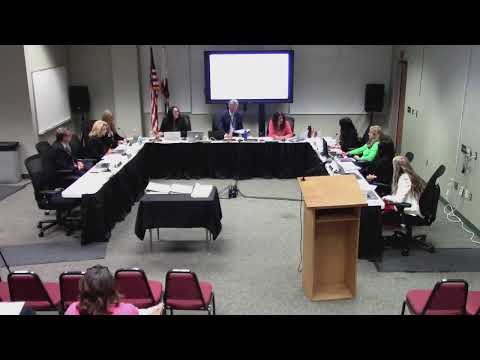
Carlsbad Unified School District trustees heard a detailed presentation Tuesday on the district's proposed 2025'26 budget and the companion Local Control and Accountability Plan (LCAP), including a plan to recruit two one-year counselors if a one-time state Learning Recovery Emergency Block Grant is received.
Budget presenter Susan Okonnell told the board the most significant change from a year ago is that the district has "fully completed this transition from state aid to basic aid," meaning local property taxes now exceed the LCFF entitlement and drive more of the district's ongoing revenue. She outlined assumptions used in the proposal: estimated average daily attendance of about 10,195, an unduplicated pupil count of 27.87%, a COLA of 2.3% and a property-tax growth assumption of roughly 3.6%.
Why it matters: the shift to basic aid makes the district more dependent on local property-tax receipts and less on state LCFF distributions. Okonnell cautioned that federal and state budget uncertainty and higher health care costs are key risks: "health insurance rates have increased for classified staff 11% and we've built in about a 10% increase for certificated plans," she said.
The presentation outlined how adopted budgets are guesstimates and are adjusted at first interim and again when audited actuals are posted. Staff said a first-interim true-up typically recognizes carryover and other adjustments and that the district expects material changes when the 2024'25 books are closed.
Special education costs were highlighted as the largest general-fund contribution. Okonnell said the district's special-ed contribution increase "has increased by more than $2 million," while SELPA/SULPA allocations decline and service needs remain high. To reduce outsized agency costs, the budget shifts many agency-funded instructional aide roles into district classified positions, which raises classified salary costs while lowering contracted services.
Trustees pressed staff on how one-time-funded positions would be sustained. Dr. Rob Nye, presenting the LCAP portion of the agenda, reiterated that the MTSS roles funded with one-time dollars "were always to provide temporary targeted support using one-time funds. These roles were not designed to be permanent." Board members asked whether the district would recruit counselors ahead of final state action; staff said they planned to begin recruitment now and place hires on lists so work can begin promptly if and when funding is confirmed.
Other specifics cited at the hearing: class-size averages reported by staff (K'3 = 24:1 average; grades 4'5 = 28:1; middle school about 34.5:1; high school about 36:1); special-education transportation is reimbursed at about 80% of prior-year expenditures; and the district established a committed $3.124 million item labeled "board LCAP priorities." The proposed budget showed a modest planned spend-down of one-time funds, leaving an approximate 8% reserve across the projection years under current assumptions.
What happens next: staff will present the proposed budget and LCAP for adoption at the June 18 board meeting; unududited actuals for 2024'25 will be presented in September and the district will issue a first interim report in December. If the governor's final budget materially changes available funding, the district can use a 45-day revision to update its adopted budget.
The public hearing closed with trustees asking staff to return a prioritized list of principals' requests and to track the costs and sustainability of any one-time-funded positions.