Get Full Government Meeting Transcripts, Videos, & Alerts Forever!
Get email alerts on the Cra Reporting And Tif Policy topic
No spam. Unsubscribe anytime.
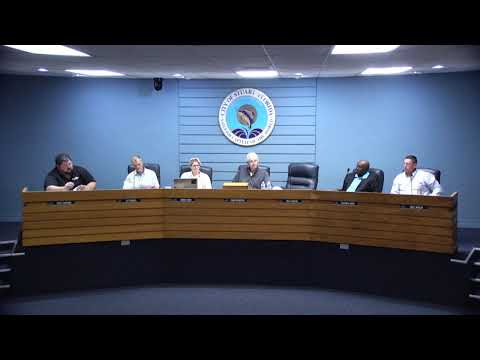
City of Stuart CRB reviews CRA 2025 annual report and board roles; presentation approved for forwarding
Summary
The Community Redevelopment Board heard the CRA director present the CRA 2025 annual report and a staff briefing on the board’s statutory roles and TIF spending rules; the board voted to approve the presentation for forwarding to the CRA board, and staff reviewed major CIP projects and limits on TIF expenditures.
The City of Stuart Community Redevelopment Board on Thursday heard the Community Redevelopment Agency’s 2025 annual report and a staff presentation on the board’s duties and limits on tax‑increment financing (TIF) spending. CRA director Gandhi Saas presented the report and asked the board to formally approve the presentation so staff may forward it to the CRA board and publish the report.
"I actually presented this annual report to the board back in January," Gandhi Saas said, noting the report must be advertised and made available for public review and that the version presented to the board is unaudited until the city’s audit is completed in May or June. Saas told the board staff will replace the unaudited figures with audited numbers on the CRA website once the audit is final.
Staff also outlined the CRB’s roles under city code and Florida Statutes (chapter 163, part 3), telling members the board is an advisory body to the commission with quasi‑judicial duties for certain land uses inside the CRA boundary. The presentation listed five CRA plan objectives — economic development, connectivity, infrastructure, neighborhoods and redevelopment support — and emphasized that TIF funds must directly benefit the redevelopment area and align with the CRA plan.
The board reviewed the CRA’s capital improvement program (CIP), adopted in 2024, and the status of named projects: downtown undergrounding and a seminal streetscape project (under way), Riverside Park streetscape (completed last November), Allender neighborhood park improvements (completed), gateway/district signage (phase one finished, phase two in design), and the Willie Gary property acquisition and deconstruction project (in design/near construction). Staff also listed potential projects that could be reconsidered when the CRA plan is amended under a new city commission, including a downtown parking garage, a Brightline station, City Hall redevelopment and an Ocola Street extension.
Staff stressed limits on TIF funding: routine government operations and maintenance not tied to redevelopment are generally ineligible, and expenditures outside the CRA boundary are not permitted. Where non‑government partners or nonprofits receive CRA funds, staff said, the expenditure must serve a demonstrable public purpose (for example, a community center, affordable housing or infrastructure) and be tied to tangible physical development rather than general operating costs.
Board member James moved to approve the presentation of the annual report; the motion was seconded and members voted in favor to forward the report to the CRA board and publish it per statutory requirements. Staff said the audited figures will replace the unaudited summary when the city audit is complete.
The presentation was informational; no further board action on CIP priorities or plan amendments was taken at the meeting. The CRA director said any change to the CRA plan or CIP projects would be brought forward for formal amendment and public review before funds could be reallocated.