Get Full Government Meeting Transcripts, Videos, & Alerts Forever!
Get email alerts on the Budget topic
No spam. Unsubscribe anytime.
Southgate council receives midyear budget report as staff warns revenues are softer than expected
Summary
Council received a midyear fiscal review showing an estimated $2 million decline in projected FY25–26 revenue and agreed to staff midyear adjustments. Debate focused on whether a proposed 7% utility users tax would be sufficient and on reconciling staff figures with the independent auditor’s report.
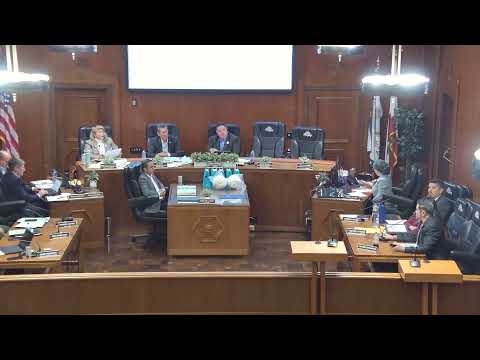
The Southgate City Council received a midyear budget report on March 10 that showed revenues coming in below earlier expectations and prompted staff to recommend midyear adjustments.
"The city started the fiscal year with an unassigned fund balance of $9.7 million and ended the fiscal year 2025 with an unassigned general fund balance of $9.44 million reflecting an operational deficit of $1.9 million that was bridged using $1.9 million from reserves," Budget and Procurement Manager Steven Aragon said, explaining year‑to‑date revenue and expenditure performance.
Staff told the council that timing of tax receipts and interest posting drove much of the year‑over‑year swings in revenue reporting: property tax installments and a December sales‑tax disbursement posted in different accounting periods between fiscal years. After adjusting for timing and other changes, staff said total expected revenue for FY2025–26 fell by about $2 million to roughly $71.8 million.
City Manager Houston and staff presented several recommended adjustments, including carryovers to capital projects and transfers—among them a proposed $1.4 million transfer to the insurance fund to reduce a deficit there. The presentation also described a shift from prepaying the UAL (unfunded actuarial liability) to paying monthly to retain liquidity and earn interest on invested funds.
Council members pressed staff to reconcile the midyear numbers with recent external audit figures. "We need to get our numbers straight so that we understand exactly what we're looking at," Council member Avalos said, pointing to discrepancies between the staff report and the independent auditor's report.
The question of new revenue was central to the debate. City Treasurer de la asked whether the proposed 7% utility users tax (UUT), previously discussed by council, would be sufficient to close the gap. City Manager Houston said staff would continue to try to find internal efficiencies and savings before recommending higher rates and that the 7% proposal should be evaluated in the context of year‑end results.
The council moved to receive the midyear report and to consider the proposed adjustments. In roll call, Council member Avalos voted in favor of receiving the report (item A) but opposed approval of the adjustments and the resolution (items B and C). Vice Mayor Rios and Mayor Baron voted to approve the full set of recommended adjustments; the motion carried.
Staff said follow‑up information will be provided to council members to explain the timing differences and reconcile figures with the auditor. The city also signaled it will continue to examine both revenue and expenditure levers and to schedule community budget outreach in advance of next year’s budget process.
The council did not adopt any immediate new revenue measure, and staff said further choices on fees, cuts or ballot measures will follow additional analysis and public outreach.