Get Full Government Meeting Transcripts, Videos, & Alerts Forever!
Get email alerts on the Spet Tax topic
No spam. Unsubscribe anytime.
City and county briefed on SPET (sixth penny) ahead of May 5 special election
Summary
Director Jen Wade told the Laramie City Council and Albany County commissioners that the 2026 Specific Purpose Excise Tax (SPET or "sixth penny") proposal totals about $95 million, is structured as an amount-based, voter-approved tax with an estimated 10–12 year collection window, and would fund roads, public safety, recreation, airport and building projects.
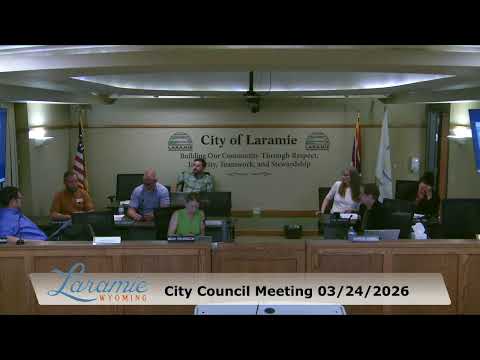
Director Jen Wade told a joint Laramie City Council and Albany County Board of Commissioners work session that the Specific Purpose Excise Tax—often called the SPET or the "sixth penny"—is a voter-approved, amount-based local sales and use tax that can be spent only on projects listed on the ballot. The proposed 2026 SPET is roughly $95 million, with collection estimated over 10 to 12 years, Wade said, and interest earned on collections must be allocated to voter-approved projects.
Wade said the SPET is a major funding tool for essential infrastructure across Albany County, the city of Laramie and the town of Rock River. She outlined the long-term pattern of SPET allocations: about 63% (roughly $89 million cumulative since 2001) has gone to infrastructure such as streets, stormwater, water and wastewater; about 12% (about $16.1 million) to recreational facilities including the Laramie Rec Center and Ice & Event Center; about 10% (roughly $14.7 million) split between public safety improvements and airport infrastructure; about 8% (approximately $10.7 million) for upkeep of county and city facilities such as the courthouse and library; around 6% (about $9 million) for parks and trails; and roughly 1% (about $1.3 million) for the county fairgrounds, Wade said.
“SPET actually stands for Specific Purpose Excise Tax,” Wade explained, adding that local residents often call it the “sixth penny.” She emphasized differences from the city’s fifth-cent tax: the SPET is presented to voters as a total dollar amount tied to a list of projects, not as a time-limited rate. That means the tax is collected until the approved amount is raised; prior SPETs have sometimes been collected more quickly than projected when sales tax receipts rose, Wade said. She pointed councilors and commissioners to the city’s information packet and the dedicated web page for the 2026 ballot materials.
Wade listed projects the city anticipates asking voters to approve: improvements to the fire station and police facility, animal-control facilities and airport upgrades among others. She also noted governing bodies collaborate to form the ballot and prioritize different kinds of projects for each SPET cycle, a reason the composition of approved projects has varied since 2001.
The next step Wade cited is the special election on May 5, 2026. She urged voters to review the information sheets available in the chamber and online and to consult the county clerk’s office for voting locations and early-voting schedules.
The presentation drew brief questions from councilors and county commissioners about priorities and project selection; no formal action was taken during the session.