Get Full Government Meeting Transcripts, Videos, & Alerts Forever!
Get email alerts on the Vegetation Management topic
No spam. Unsubscribe anytime.
Utilities committee approves two-year tree-trimming contract as members push for more crews and infrastructure changes
Summary
The Cleveland City Council Utilities Committee approved a two-year contract for tree-trimming services for Cleveland Public Power, with staff estimating about $500,000 in external vendor spending per year. Council members pressed DPU on crew capacity, standards, vendor selection and the long-term option of burying power lines.
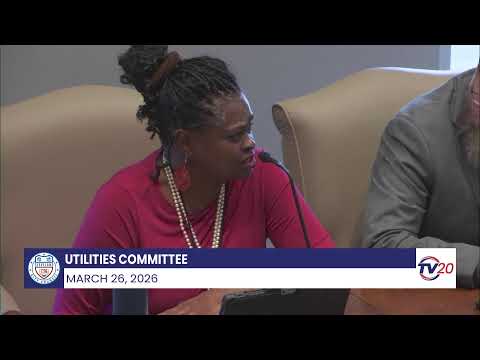
The Cleveland City Council Utilities Committee on March 26 approved Ordinance 184-2026, a two-year requirement contract to secure tree-trimming services for Cleveland Public Power (CPP) that Department of Public Utilities staff estimated will require roughly $500,000 per year in external vendor spending.
Committee Chair Brian Kazy and Director of Public Utilities Marty Keane said the contract supplements CPP’s internal forestry crews and is aimed at maintaining safe clearances around power lines, removing dangerous limbs and responding to storm damage. “We try to be cognizant of the importance of our tree canopy, the aesthetics of our streets that have the heavy tree canopy,” Director Marty Keane said, while also stressing the safety trade-offs involved with distribution-line pruning.
Why it matters: CPP serves dense, tree-lined neighborhoods where aging trees and recent high-wind storms have repeatedly damaged lines and poles. Committee members said the recurring outages and pole strikes create substantial reliability and safety concerns for residents and businesses and argued for more preventive maintenance.
What the ordinance does: The contract covers trimming branches and vegetation near lines, rights-of-way clearing, removal of brush and trees when necessary, and related labor and equipment. Staff said the RFP requires certified arborists to be on contractor crews and that the department balances internal forestry teams (four internal crews, eight personnel referenced by CPP) with outside contractors for capacity during storms and large jobs.
Council pressure and alternatives: Council members pressed for details on staffing and alternatives. Councilman Mike Polensek noted frequent storm damage and asked whether the city had considered expanding internal crews or relying on Urban Forestry. Director Keane said the department has discussed coordination with Urban Forestry but flagged differences in required certifications, pay scales and collective-bargaining constraints that limit direct substitution. Councilman Austin Davis raised burying power lines as a long-term resilience option, saying it could reduce repeated outage risk; the director agreed burying lines could help but noted high costs and other trade-offs.
Procurement and local participation: Committee members asked how past vendor performance and local businesses factor into awards. Staff said procurement is governed by law, that the RFP includes a certified-arborist requirement, and that the department pursues OEO/CSB participation goals (about 20%) while balancing response-time and insurance requirements.
Costs and past spending: Staff said the city previously spent over $1 million in a heavy year (2023) while aiming for a lower steady-state external spend near $500,000 annually. The department added an internal crew recently as part of efforts to balance internal capacity and contracted work.
Next steps and implementation: The committee approved the ordinance at the meeting; the director and commissioners will proceed with the planned procurement. Members also agreed to continue coordination among CPP, Urban Forestry and procurement staff to refine service levels, vendor requirements and emergency response plans. The committee also discussed scheduling field visits so members can see CPP operations and confirm standards.
Ending: The committee moved and approved the measure on March 26; staff said procurement and vendor selection will follow the RFP process and city contracting rules.