Get Full Government Meeting Transcripts, Videos, & Alerts Forever!
Get email alerts on the Achievement Integration topic
No spam. Unsubscribe anytime.
Board approves three-year Achievement & Integration plan after hours of debate over staffing priorities
Summary
The Prior Lake–Savage Area Schools board voted 4–3 to approve a three-year Achievement & Integration (ANI) plan that funds student-success coaches, deans and liaisons. Critics pushed for more direct instructional staff and clearer program outcomes; administration said state coding classifies these positions as direct student support.
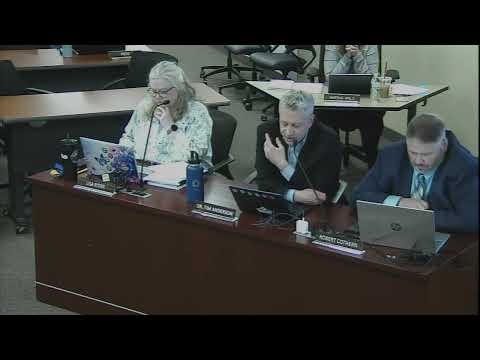
The Prior Lake–Savage Area Schools Board of Education approved a three‑year Achievement & Integration (ANI) plan on March 9 after an extended discussion about whether the money should fund administrative positions or direct instructional services.
The plan, funded through state ANI revenue, allocates funding for deans, student success coaches and a cultural liaison to support students identified under the ANI eligibility criteria. After more than an hour of debate the board approved the proposal by roll call, with Directors Smith, France, Olad and Chair Bullan voting yes and Directors Mason, Johnson and Atinson voting no.
Supporters framed the plan as an invested approach to student-facing support. Dr. Michael Thomas, the district superintendent, told the board that many of the positions are coded at the state level as “direct student support” and are intended to be embedded in school-based student assistant teams. Two deans described day-to-day work they said reaches students who are not yet able to access learning without intensive relationship-based supports. Lindseay Ktock, a dean at Glendale, said deans "meet with students in small groups, meeting with students one-on-one" and emphasized checking in with students so they are ready to learn.
Opponents said the plan overly weights staffing toward administrative or coordinator roles rather than adding classroom-focused interventions. Director Mason summarized that the prior ANI cycle "has not achieved the intended goals" for narrowing achievement gaps and said the proposed budget allocated nearly 60% to staff who do not provide direct instruction in ANI activities, citing guidance that administrative costs should generally stay near 10% of such plans. Mason argued the district should instead expand early-grade reading intervention, tutors and gifted-and-talented identification.
Director Smith, who supported the plan, said the document is the district’s roadmap for addressing K–3 reading and other goals and that the implementation details would be worked out by district leaders and building teams.
Administrators pointed to data they said showed modest improvements for historically underserved groups in recent plan cycles: small percentage-point gains in reading and math proficiency and improvements in attendance and proportionality in AP access. Dr. Thomas said those trends represent a "proof concept" that supports continued targeted investment.
The approved plan includes specific positions and benefits line items; several board members asked that the district provide clearer, measurable connections between those positions and direct student programming, and to bring follow-up tactical plans to the board as activities are assigned and evaluated.
Next steps: administration will implement the plan as approved and bring more detailed tactical work plans and metrics to the board during implementation and annual reporting cycles.
Votes at a glance: the ANI plan passed on a roll-call vote 4–3 (Smith, France, Olad, Chair Bullan = yes; Mason, Johnson, Atinson = no).