Get Full Government Meeting Transcripts, Videos, & Alerts Forever!
Get email alerts on the Federal Leadership Coordination topic
No spam. Unsubscribe anytime.
Joint Economic Committee hearing: witnesses say FBI is best positioned to lead response but urge faster coordination and possible legislative fixes
Summary
At a Joint Economic Committee hearing, witnesses told members the FBI is "best positioned" to lead international responses but said agencies must move faster, clarify definitions of the threat, and consider congressional legislative changes; one witness urged more emphasis on prevention and restitution rather than prosecution alone.
At a Joint Economic Committee hearing, witnesses and members debated which federal agency should lead responses to large-scale, cross-border fraud and abuse, with witnesses saying the FBI is best positioned but urging faster coordination and clearer legal definitions.
Mr. Bagodyan told the panel that his team "assessed that the FBI was best positioned given their responsibilities and capabilities, especially internationally" and described the bureau as a natural starting point for interagency leadership. He said other agencies had given mixed responses to the panel’s recommendations and that coordination is under way, but warned "we cannot afford a long time gap."
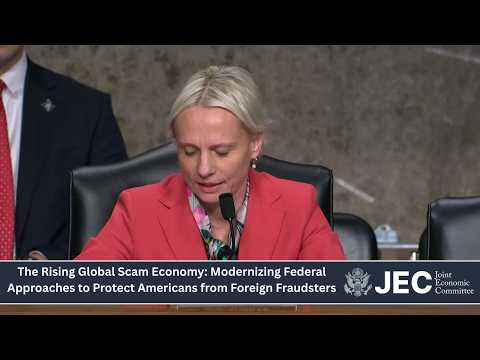
Representative Spartz pressed witnesses on whether the FBI needs an altered internal structure to take on such work, arguing that "the problem is expediency" and that too much discussion can impede action. Ms. Griffin said the FBI’s initial response had proposed creating working groups and acknowledged that "that could be part of the solution," but added that significant legislative changes "would begin in Congress" and may be required to give agencies the authorities they say they need.
Ms. Griffin also emphasized a definitional hurdle: "If you don't know what you're going to fight, you will not be able to do that," she said, arguing that clear legal and operational definitions are a prerequisite for any effective multiagency effort.
Mr. Baker, who described himself as viewing the issue from outside government, cautioned against relying solely on law enforcement. He said, "I question how much value we are getting out of law enforcement," and argued that preventing fraud and returning funds to victims should be prioritized. Baker suggested incentives for those who help identify fraud and said prosecuting perpetrators is "maybe a little" part of the solution but not the whole answer.
The panel did not adopt formal votes or motions during the discussion recorded in the transcript. Lawmakers and witnesses repeatedly called for accelerated implementation of recommendations, clearer definitions of the scope of wrongdoing to be targeted, and consideration of legislative fixes in Congress to enable more effective interagency responses. The hearing concluded with an emphasis on coordination and urgency; no formal decision on lead agency structure or statutory changes was reached in the recorded segments.