Get Full Government Meeting Transcripts, Videos, & Alerts Forever!
Get email alerts on the District Finance topic
No spam. Unsubscribe anytime.
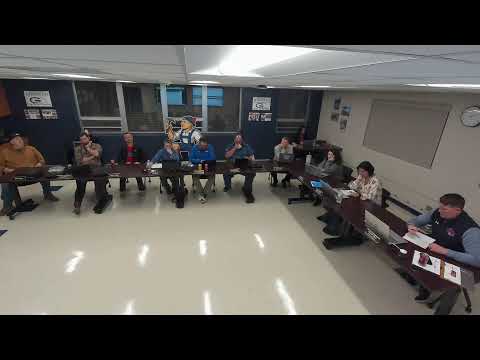
Board hears broad budget update; major facility needs could push referendum planning
Summary
Superintendent presented a detailed budget update, flagged state funding uncertainty, and outlined several capital needs — including a possible upgrade to the main water line for fire suppression and a dust-collection system for CTE spaces — that the board said should inform referendum planning (operating vs. bond or hybrid).
Superintendent Patrick gave a comprehensive budget update that covered state funding uncertainty, mid‑year fiscal controls and a set of capital priorities that may require a referendum.
On funding, administrators said the state’s remedy for special-education reimbursement remains unsettled; the superintendent referenced ongoing political negotiation and noted other districts have pursued legal action. The board discussed membership in the Wisconsin Rural Schools Alliance (WARSA) for data and advocacy supports.
Capital and facilities concerns dominated the discussion. Facilities staff and external consultants flagged that the school’s main water line (currently 4‑inch) will likely need an upgrade to a 6‑inch main to support modern fire suppression needs if substantial CTE or other building work proceeds. The board was told that piecemeal repairs (band‑aids) would leave the district repeatedly retrofitting systems and could be costlier over time. The CTE area was singled out for ventilation, dust-collection and other safety enhancements related to welding and shop activities; options ranged from an exterior dust‑collector to more extensive roof or structural reinforcement depending on the final scope.
The superintendent also outlined smaller capital items and operational questions: a recommendation to purchase a $5,000 salt spreader attachment for an existing machine (to avoid reliance on city crews and service timing), the planned sale of an old Bobcat (noting substantial prior repairs), and the need to replace aging phone and public-address systems that are beyond vendor support.
On process, the board approved work with School Perceptions to run community surveys to inform referendum messaging and timing. Trustees discussed timeline pressures for a possible November ballot and agreed to begin working on options now so the board can choose whether to pursue an operating referendum, a bond for facilities, or a hybrid approach. Several board members urged early community outreach and a task-force style rollout to craft the referendum question(s). Administrators committed to returning with cost estimates, the scope of required upgrades (water main, dust collection), and refined budget scenarios to support a referendum decision.