Get Full Government Meeting Transcripts, Videos, & Alerts Forever!
Get email alerts on the Arms Control topic
No spam. Unsubscribe anytime.
House panel presses State Department on 'T family' reorganization, verification and the future of arms control
Summary
Under Secretary Thomas G. Dano told the House Foreign Affairs Committee that a recent State Department reorganization groups arms control, nonproliferation and security bureaus into a larger —T family— to improve coordination; lawmakers pressed him on verification of arms-control measures, the expiration of New START, and oversight of AI-related exports.
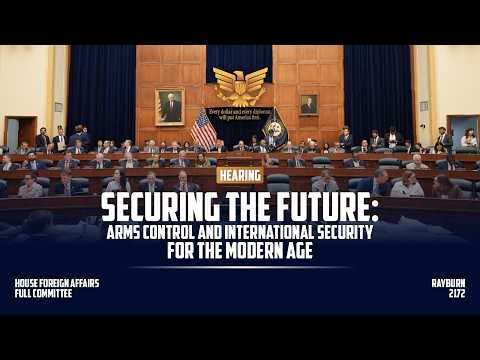
House Foreign Affairs Committee members on Wednesday scrutinized the State Department—s reorganization of international security functions and pressed Under Secretary Thomas G. Dano on how the new "T family" will manage arms control, nonproliferation and emerging threats.
Under Secretary Dano, the first official to lead the expanded set of bureaus, said the reorganization consolidated several offices to position the department to confront a broader threat environment. "The reorganization consolidated the department's international security functions, expanding the T family from three to five bureaus," Dano told the committee. He added the change was intended to improve "decisionmaking and enable faster, more efficient responses to both ongoing and emerging threats."
Why it matters: Members pointed to the expiration of the New START treaty as a pressing example of how arms-control frameworks must be modernized. "For the first time in the nuclear age, the US faces two nuclear peer adversaries," Representative Self said, pointing to accelerated Chinese and Russian programs. Dano said any future arms-control agreement must be "verifiable and enforceable," and that the administration is engaging P5 partners through ongoing diplomatic channels while acknowledging some discussions are classified and cannot be detailed in public.
Members also questioned how the department will police technology transfers. On export controls for advanced AI chips, Dano told lawmakers the department participates in licensing reviews and coordinates closely with the Commerce Department's Bureau of Industry and Security. "We review every license application," he said, describing a multi-agency vetting process and information sharing with BIS and intelligence partners.
On emerging threats, Dano described the new Bureau of Emerging Threats as a diplomatic "overlay" to marshal allies and intelligence partners against fifth-generation gray-zone tactics such as cyber intrusions and weaponized migration. "The emerging threats bureau—s job would be to interface and provide the diplomatic overlay so that... information is shared across our alliances and partnerships," he said.
The hearing also highlighted tension between public oversight and classified diplomacy. Ranking Member Gregory Meeks pressed Dano and the committee for more transparency about the administration's strategy on Iran and strategic stability. Dano said that while sensitive engagements cannot always be discussed in open session, the administration remains willing to brief Congress after classified engagements conclude.
What comes next: Lawmakers pressed for more detailed briefings and for faster information sharing when critical arms-control or verification issues arise. Dano said the department would share information where appropriate and continue to align nonproliferation and arms-control work tightly with diplomatic efforts and partner agencies.
Ending: The hearing underscored bipartisan concern about modernizing the architecture for nonproliferation and arms control, enforcing verification, and ensuring export-control processes keep pace with rapidly evolving technologies.