Get Full Government Meeting Transcripts, Videos, & Alerts Forever!
Get email alerts on the Codes And Standards topic
No spam. Unsubscribe anytime.
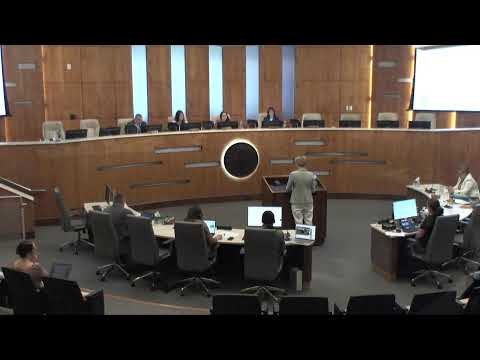
Adams County adopts 2025 Colorado Wildfire Resiliency Code; takes first readings on updated fire, building and energy codes
Summary
At second reading the board adopted the 2025 Colorado Wildfire Resiliency Code with two floor amendments clarifying appendices and correcting a typographical reference; the board also held first readings on the 2024 International Fire Code and 2024 building/electrical/low energy and carbon code updates with a new exemption for detached ADUs from residential sprinklers.
The Adams County Board of Commissioners adopted Ordinance No. 14 at second reading on March 27, 2026, approving the 2025 Colorado Wildfire Resiliency Code with two floor amendments. County Attorney Office staff described the first amendment as a correction of a typographical reference and the second amendment as language explicitly stating that three appendices related to permits, construction documents and inspection enforcement are not being adopted; staff said the county has underlying provisions that already address those topics.
Sally Daggett of the County Attorney's Office said the wildfire resiliency code is required for local governments with jurisdiction over areas in the wildland‑urban interface and must be adopted by April 1, 2026. Daggett said the County followed required notice rules after first reading and that the proposed floor changes respond to questions raised by the attorney for North Metro Fire Rescue District. Commissioner Hanson moved to approve the ordinance with the two floor amendments; Commissioner Urcia seconded and the motion passed. The transcript records the motion, second, and passage, and includes comments from commissioners noting the statutory requirement to adopt the code.
The board also conducted first readings on two additional code updates. Ordinance No. 4 would repeal the 2018 International Fire Code and adopt the 2024 edition, with an effective date of July 1, 2026; staff said this was presented as first reading and that additional newspaper notices will follow prior to adoption. Staff reported that the fire code update was included across multiple study sessions and that outreach engaged roughly 3,000 constituents, as part of an 18‑month process.
Ordinance No. 12 would repeal the 2018 building codes and replace them with the 2024 International Building Codes, repeal the 2017 electrical code to adopt the 2023 electrical code, and adopt the model low energy and carbon code. Staff highlighted the most substantive residential issue discussed in study sessions — whether to require residential sprinklers in one‑ and two‑family homes — and reported the board’s consensus to retain an existing exemption and add a new exemption that would exempt detached accessory dwelling units (ADUs) from the sprinkler requirement.
Staff noted that second reading for Ordinance Nos. 4 and 12 is scheduled for April 21, 2026. Commissioners emphasized the need for outreach and education for builders and residents about code changes and discussed potential enforcement and intergovernmental coordination with fire districts.
The transcript does not include the full text of ordinances or complete outreach materials; staff said those materials and legal notices are part of the code adoption process and that additional clarification and education may be needed for affected stakeholders.