Get Full Government Meeting Transcripts, Videos, & Alerts Forever!
Get email alerts on the Public Art topic
No spam. Unsubscribe anytime.
Palatka CRA tables $19,500 mural restoration plan amid ownership and liability concerns
Summary
The CRA discussed using roughly $19,500 from the public art budget for mural restorations but paused the proposal after commissioners and public commenters questioned who owns murals on private buildings, long-term maintenance obligations, and the risk to taxpayer funds; the item was tabled for further discussion with the mural committee.
The Palatka CRA voted to pause consideration of funding for mural restoration after a broad discussion about ownership, maintenance and liability for murals that mostly sit on private buildings.
Staff presented a funding estimate showing the cost for up to four mural restorations would total about $16,500, with a late invoice for a train-station mural adding $3,000 and bringing the year’s total request to about $19,500 out of a $40,000 public art budget. "That will bring the total funding out of our public art budget to $19,500 for where we're at this year," staff said.
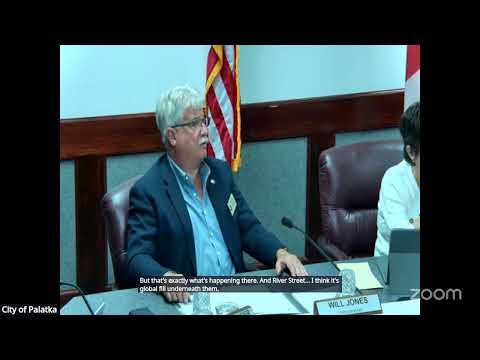
Public commenters and several commissioners raised concerns that many murals are privately owned and city-funded maintenance may not be protected if a building owner later removes or alters an exterior wall. Commissioner Palazzolo urged the city to first "establish who owns what mural and who will allow you to do what work on with what money," and others asked whether the CRA should limit funding to city-owned properties or require relocation-ready panels to protect the investment.
Cheryl Roach Platko, a public commenter, criticized recent tree and right-of-way plantings and questioned how much money had been spent on projects that look neglected; she urged care for historic district landscaping while discussing murals.
Staff said the CRA historically has funded some restorations and that the mural committee maintains a list of priorities, but that there is no comprehensive, city-held ownership registry for all 26 murals. The board agreed to bring the mural committee into the conversation, develop clearer parameters for when CRA funds would be used, and table the funding decision to a near meeting or workshop.
Next steps: staff will coordinate with the mural committee, clarify ownership and written agreements with building owners, and return to the CRA with recommended funding parameters and protections before releasing additional public-arts funds.