Get Full Government Meeting Transcripts, Videos, & Alerts Forever!
Get email alerts on the Firearms Policy topic
No spam. Unsubscribe anytime.
Committee approves ban on certain convertible-pistol components after extended debate over scope and constitutionality
Summary
After extended questioning about which handguns would be covered and whether manufacturers’ redesigns would be captured, the Judiciary Committee passed SB 334 to prohibit specified machine-gun convertible-pistol components; opponents warned of constitutional risk and potential to sweep in common designs.
The Judiciary Committee passed Senate Bill 334 (Sen. Love), which would prohibit specified components and configurations that enable semiautomatic pistols to accept devices that create automatic fire. Committee members debated technical definitions (including “cruciform trigger bar” and how a Department of State Police regulatory list would be used) and whether the bill would inadvertently ban handguns with manufacturer-designed safety features.
Several delegates pressed the sponsor and counsel on which makes and models could be affected, citing Glock, SIG Sauer and Smith & Wesson as examples raised in committee discussion. One member noted some manufacturers already altered designs to make attachment of auto sears more difficult; another observed that because the bill’s language includes certain trigger-bar geometries, even redesigned models might still be covered.
Delegate Arcorn, expressing a constitutional objection, said, “There’s nowhere that’s gotten away with this yet and there won’t be ’cause it’s unconstitutional.” Other members questioned whether the bill’s exceptions for law enforcement and the amendment changing a statutory "shall" to a permissive "may" for the Department of State Police’s regulatory role would reduce legal risk.
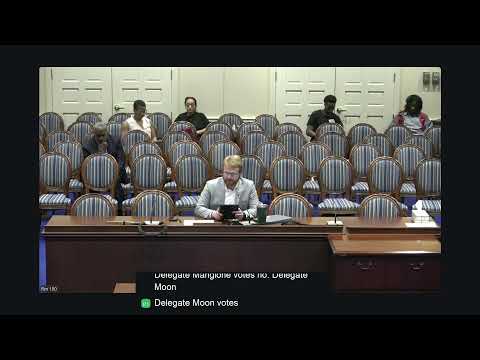
After amendment and debate the bill passed on a roll-call vote, 12–6. The committee recorded several members asking for additional education and noting the likely legal challenges state statutes of this type have faced elsewhere.
The committee’s passage sends the measure to the next legislative stage; members who opposed the measure said they will register concerns about breadth and litigation risk on the record.