Get Full Government Meeting Transcripts, Videos, & Alerts Forever!
Get email alerts on the Grant Program Review topic
No spam. Unsubscribe anytime.
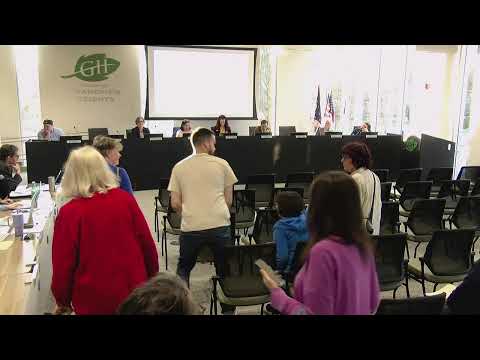
Grandview Heights ad hoc grants committee opens review of suspended community grants program
Summary
An ad hoc committee in Grandview Heights opened a review of the city's suspended community grants program, debating eligibility rules, past reappropriations, deadlines and possible reporting and scoring requirements before agreeing to meet again.
The Chair opened the City of Grandview Heights ad hoc grants committee and said the city's community grant program is suspended pending the committee's review and a recommendation to city council. "The grant program has been suspended pending the committee's review and recommendation of council's approval," the Chair said.
The committee's charge is narrow and short-term: review the current application process, selection criteria and eligibility, consider priorities for funding and recommend any changes to council. Members discussed several concrete options, including creating a scoring rubric, adding a required recipient report and clarifying whether nominations by third parties should remain part of the process.
Committee members reviewed who may apply under current rules: private or nonprofit organizations that are located in, provide service to, or impact Grandview Heights residents. The rules currently exclude government agencies and political or religious organizations; general operating costs and deficit reduction are not eligible uses. One member urged clearer rules after citing a past instance involving COGO where funds had been routed through the City of Columbus and raised questions about whether that use matched the grant guidelines.
Staff told the committee that council controls appropriations and can reallocate funds through a supplemental appropriation ordinance, a path used in a prior year when community-grant money was reappropriated for a council special-projects fund. Staff emphasized that any reallocation should be documented to withstand audit scrutiny and that unobligated appropriations lapse at year end and roll back into the general fund; the committee discussed an example budget level noted in the meeting of $5,000 as an annual appropriation placeholder.
Members debated process design, weighing a rolling application process against a firm annual deadline (previously Oct. 31). Options discussed included a single annual cutoff, quarterly award rounds to create recurring application windows, or a hybrid that allows emergency requests if funding remains. On nominations, several members recommended requiring organizations to apply directly so applicants bear responsibility for proposed uses of funds and for reporting.
The committee did not make final policy changes at the meeting. Members agreed to schedule a follow-up meeting to examine the application form and revisit selection criteria before drafting a recommendation to council. The ad hoc grants committee adjourned on a motion and second.