Get Full Government Meeting Transcripts, Videos, & Alerts Forever!
Get email alerts on the Economic Development topic
No spam. Unsubscribe anytime.
Economic-development briefing lays out municipal incentives, abatements and TIF options
Summary
An economic development presentation to Grandview Heights council explained community reinvestment areas (CRAs), municipal job creation tax credits, tax-increment financing and new community authorities as tools to attract business and fund infrastructure; council asked for follow-up detail on local applications.
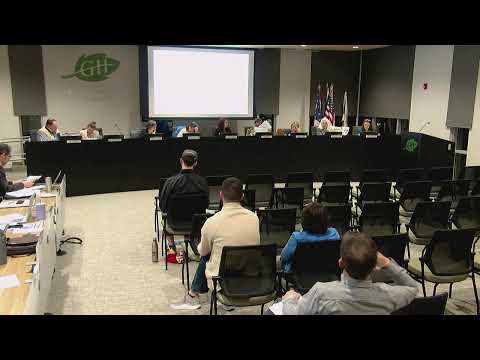
Grandview Heights council received a technical briefing on March 9 about incentive tools the city can use to encourage private investment, with staff emphasizing those policies must be calibrated to preserve municipal revenue that funds local services.
"Incentives are public policy tools used to encourage private sector activity that aligns with community goals," said Mike Jacobe, the economic development consultant presenting the briefing. Jacobe summarized property-tax abatements under Community Reinvestment Areas (CRAs), municipal job-creation tax credits (JCTC), tax-increment financing (TIF/TIFF) and the use of new community authorities (NCAs) to fund infrastructure in development districts.
The presentation noted that Grandview Heights derives roughly 70% of its general revenue from municipal income tax and that commercial payrolls — not residential property — are a primary revenue driver. Jacobe cautioned that tools such as CRAs and TIF carry trade-offs: abatements reduce near-term tax receipts (sometimes requiring school compensation arrangements), while TIFs redirect new tax value to infrastructure for a limited term. The JCTC was described as a performance-based municipal credit applied to new payroll withholding for approved projects, typically awarded competitively and with monitoring requirements.
Jacobe illustrated how Grandview Yard CRA agreements and active TIF districts have been used to fund parking, green space and public infrastructure and noted typical contractual guardrails (term limits, minimum investment thresholds, school compensation arrangements). He said municipalities commonly set conservative exemption percentages and require performance reporting; underperformance can reduce or terminate credits.
Council asked for local examples and clarifications. Members asked whether NCAs exist locally (presentation noted Grandview Crossing was effectively a Columbus NCA) and whether frequent hotel renovations would trigger newly extended abatement terms (presenter said only threshold renovations that meet state law and program rules qualify). Jacobe recommended a future policy review to update nearly 30-year-old incentives and to align incentives with current market competition and the city's strategic plan.
The council did not take action after the briefing but scheduled follow-up discussions with administration and the city’s financial advisor.