Get Full Government Meeting Transcripts, Videos, & Alerts Forever!
Get email alerts on the Local Development topic
No spam. Unsubscribe anytime.
Inglewood officials and Chick‑fil‑A present redesigned plan for Manchester and Crenshaw corner
Summary
City staff and Chick‑fil‑A representatives described a proposed Chick‑fil‑A at the former Big Lots site, highlighting a Manchester‑facing building, a rear drive‑thru, expanded on‑site parking and community programs; the project is scheduled for a planning commission hearing on March 17.
City of Inglewood development staff and Chick‑fil‑A representatives on Tuesday presented a proposal to redevelop the former Big Lots parcel at the Manchester and Crenshaw intersection with a Chick‑fil‑A restaurant and related site improvements.
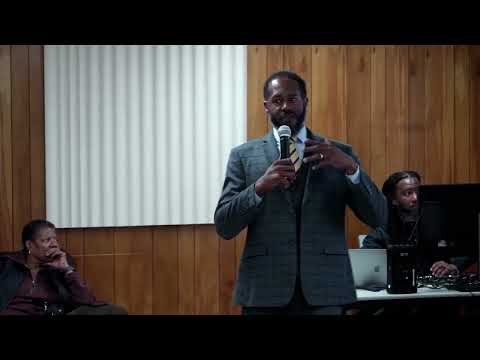
Bernard Mcrungi, Development Services Director for the City of Inglewood, told residents the project is intended to “activate” the corridor and that staff have pushed for higher design standards and conditions of approval. He said the initial phase would be a multi‑million‑dollar investment and that “nothing has been decided yet” until the planning commission considers the application on March 17 at 7 p.m.
Alex Kazakov, the property owner, said the owner has pursued grocery and medical tenants for roughly 15 months and that major chains did not meet their site requirements. He said Chick‑fil‑A approached the ownership about six months ago and that the company and owner worked with city staff to reshape the plan. “We love this intersection,” Kazakov said, describing a $5–6 million initial investment planned for the corner.
Carlos Arius, who identified himself as a Chick‑fil‑A development and construction representative, described design changes made with city staff to align the store with the city’s corridor vision. The revised site moves the building to the Manchester frontage so the storefront faces the sidewalk and places the drive‑thru lane behind the building to minimize visibility from the corner. Arius said the company redesigned materials, added landscaping and increased on‑site parking to support both drive‑thru operations and sit‑down dining.
Stanley Webster, a local Chick‑fil‑A operator who runs a nearby store, spoke about local programs he operates and said a new location could create roughly 80 to 100 jobs. Webster described partnerships with local schools and nonprofits, regular food donations and workforce programs, and urged residents to judge operators by local performance.
Staff and Chick‑fil‑A answered residents’ questions about schedule, traffic and community benefits. Construction and permitting were estimated to take several months, with on‑site work of roughly seven to eight months — putting a realistic completion window at approximately two to three years, contingent on approvals and the permitting process. On traffic and parking, Bernard Mcrungi and Chick‑fil‑A representatives said the plan draws most vehicular access to Manchester and includes mitigation tactics; the design provides about 80 parking spaces on site compared with roughly 30 spaces that code would require for the use, and a double‑lane drive‑thru with an on‑site queue sized to hold up to 35 cars to reduce spillover onto adjacent streets.
When asked about green space, staff said there is no dedicated public park area on the Chick‑fil‑A parcel, but the plan includes enhanced corner landscaping, an outdoor patio and a limited turf/play area adjacent to the dining patio. On community guarantees, staff noted philanthropic commitments by operators cannot be enforced as land‑use conditions; Chick‑fil‑A representatives and the operator described ongoing local programs and said corporate and operator contributions occur independently. Staff added that the company indicated a corporate/local contribution of about $20,000–$25,000 to a local food bank as part of broader area efforts.
Speakers also addressed an existing Rally’s tenant on the block. City and property representatives said Rally’s holds lease rights that extend roughly 10 years (including a remaining five‑year option) and that the owner has approached the tenant about buyouts but cannot compel an early vacancy. Bernard said the Chick‑fil‑A would be the first phase of a potential three‑phase redevelopment that city staff and the owner are discussing; future phases could include residential development and other uses, but those plans remain preliminary.
The planning commission will consider the project at a special meeting on March 17 at 7 p.m.; staff said the commission will render a decision at that hearing. Bernard said staff collected written questions during the presentation and will follow up by email or phone for items not addressed during the meeting.
No formal action was taken at the community meeting; the planning commission hearing is the next scheduled decision point.