Get Full Government Meeting Transcripts, Videos, & Alerts Forever!
Get email alerts on the Comprehensive Plan topic
No spam. Unsubscribe anytime.
Marathon County executive committee forwards Comprehensive Plan 2026 to full board after hearing on energy projects
Summary
After a public hearing focused largely on community concerns about utility-scale wind, solar and battery storage, the Marathon County Executive Committee voted unanimously to forward the Comprehensive Plan 2026 and public comments to the County Board with suggested language edits for further consideration.
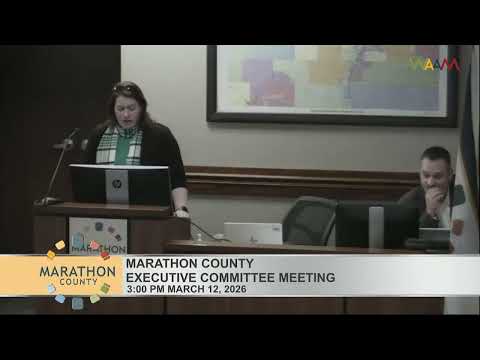
The Marathon County Executive Committee on May 12 closed a public hearing on the proposed Marathon County Comprehensive Plan 2026 and unanimously moved the draft and today’s public comments to the full County Board for further consideration and possible amendments, committee members said.
Lori Miss Kimmons, conservation planning staff director, told the committee the draft is a complete update to the county’s 2016 plan that refreshes background data and revises goals, objectives and action strategies. She cited the statutory requirement the committee referenced in the hearing that comprehensive plans be updated at least every 10 years and that a public hearing be held before adoption; the transcript records the statute as “6610001.” Staff also told members they received two written comments and that many early submissions focused on wind and solar projects.
Why it matters: The committee’s recommendation is advisory; adoption of the Comprehensive Plan 2026 would occur later by ordinance at the County Board. Committee discussion and the public testimony at today’s hearing centered on whether the draft does enough to protect farmland, wildlife, infrastructure and public safety as utility-scale energy projects are proposed in the county.
During deliberations, supervisors acknowledged that state law limits local regulation of large projects in some cases and discussed paths available to the county, including negotiated developer agreements, litigation, and legislative advocacy for greater local authority. Supervisor Boots outlined negotiable items counties typically seek in agreements, such as payments in lieu of taxes, ecological assessments, road-repair provisions, local hiring commitments and decommissioning terms. Vice Chair Dickinson and Administrator Leonard proposed packaging staff and supervisor edits and presenting them to the full board at an educational meeting or special session.
Public facing action: Supervisor Boots moved, and Supervisor Robinson seconded, a motion to ratify the committee’s prior action and forward the plan and the public comments to the County Board; the motion carried unanimously, and the committee directed staff to compile suggested edits for the full board to review. The transcript records the vote as unanimous but does not list individual yes/no votes.
Staff and next steps: Staff said the plan remains an advisory guiding document rather than an enforceable ordinance until the full County Board acts. Committee members asked staff to collect suggested language and public comment and to present a packet of edits at the full board’s educational meeting so the board can consider specific amendments before any ordinance adoption vote.
Quote: "This plan is a guiding document; it is not considered an enforceable document," Lori Miss Kimmons said, describing the plan’s role in directing county strategic priorities and informing zoning and policy decisions.
What’s next: The Executive Committee forwarded the draft and public input to the full County Board with recommended discussion and potential edits. The committee did not adopt the plan as ordinance; the County Board will consider the draft and proposed changes at a future meeting.